
Last Updated: June 23, 2021
Best Lakes in Wyoming
Known as America’s Big Sky state, Wyoming is home to skyscraping mountain peaks, wide open plains, and millions of acres of public land. The US government owns almost half of a state that’s iconic for its jaw-dropping beauty. The public land includes national and state parks, historic trails, recreational areas, and natural and manmade lakes. All of these features make Wyoming a popular vacation destination. Visitors come to take a laid-back paddle on a national park lake, hook a trophy trout on a mountain lake, or take up a variety of watersports on a boundless reservoir.
Wyoming has varying elevations from 3,100 ft at the lowest to 13,790 ft at Gannet Peak, the highest point. The thousands of lakes sit at various elevations. Make plans to check out some of Wyoming’s lakes. Here are 10 of 4,000 to get you started.
1. Jackson Lake
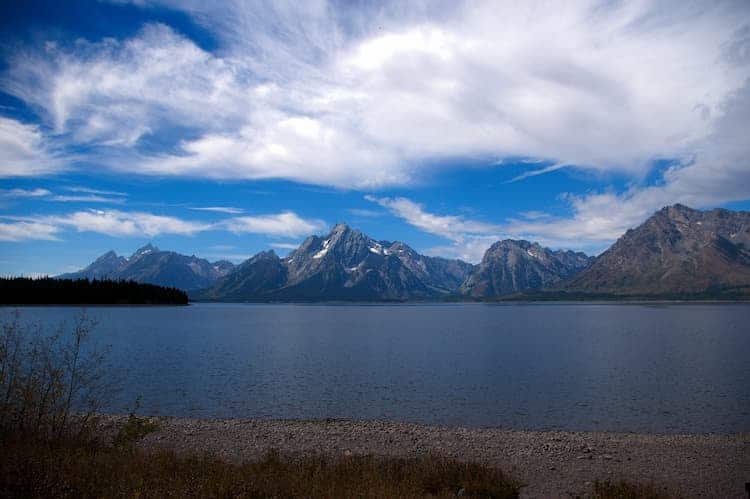
Jackson Lake is near Jackson Hole, Wyoming’s world-famous ski town. It’s one of the best lakes for fishing and boating. Its location at the base of the Tetons in Grand Teton National Park means the lake is cold, deep, and teeming with great catches. Trophy-sized monsters are possible for cutthroat, salmon, pike, and brook and brown trout. The best fishing is from June to October, and the fish are more active at sunset and after dark, but anglers shouldn’t dismiss getting a midday catch. In January, ice fishing begins. The winter months are prime for catching monster fish. The action starts at sunrise, lasts until noon, and then picks up again in the evening.
All types of watercraft are allowed on the lake from motorized to paddle boats to inflatables. The lake has four launching locations for both motorized and non-motorized boats and one for non-motorized only. A permit is needed to launch all watercraft.
Jackson Lake has hiking trails and lake-accessible campgrounds.
2. Yellowstone Lake
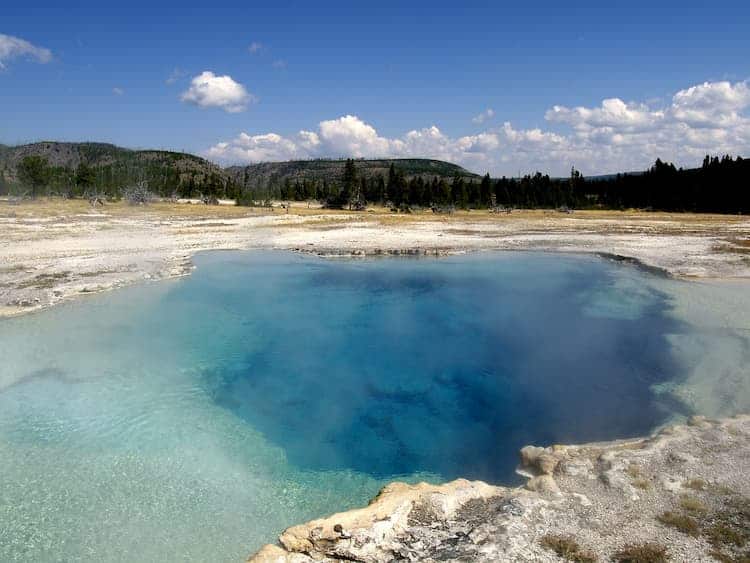
Yellowstone Lake is in the much-visited Yellowstone National Park. It’s the park’s largest lake and at 7,000 ft is the highest freshwater lake in North America. It has a surface area of 132 square miles and a 141-mile shoreline. If somehow all the water could be drained you would find deep canyons, hot springs, and geysers.
The lake’s high elevation means the water is extremely cold and not suitable for swimming. The water temperature averages 41 degrees. It stays frozen from late December to January and thaws in late May. Visitors enjoy guided boat tours to marvel at the scenery and hiking and biking on the trails around the lake.
Anglers will be interested to know that Yellowstone Lake has more cutthroat trout than any lake on the continent. Scientists think that the presence of the cutthroat, a fish native to Pacific waters proves that the lake once drained into the Pacific and fish crossed the Continental Divide at Two Ocean Pass.
3. Buffalo Bill Reservoir
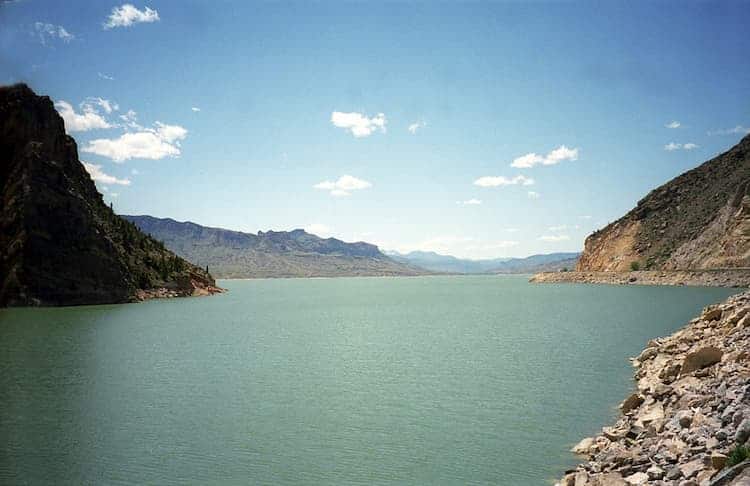
Image courtesy of Flickr
The Buffalo Bill Reservoir was created by constructing a dam of the same name on the Shoshone River in the early 1900s. It’s a large reservoir with a surface area of approximately 8,000 acres. Located just of the Yellowstone Highway, it’s easily accessed by shoreline roads and three boat ramps.
The reservoir is open all year for blue-ribbon quality fishing. Anglers snag several cold-water species such as brown trout, rainbow trout, mackinaw, and cutthroat trout. Other popular activities include big game and waterfowl hunting, wildlife watching, horseback riding, and hiking the trails around the reservoir. Windsurfing has grown in popularity in recent years.
You’ll find excellent camping facilities that are easy to access. There are RV sites with dump stations, restrooms, drinking water, picnic tables, windscreens, and primitive campsites.
4. Glendo Reservoir
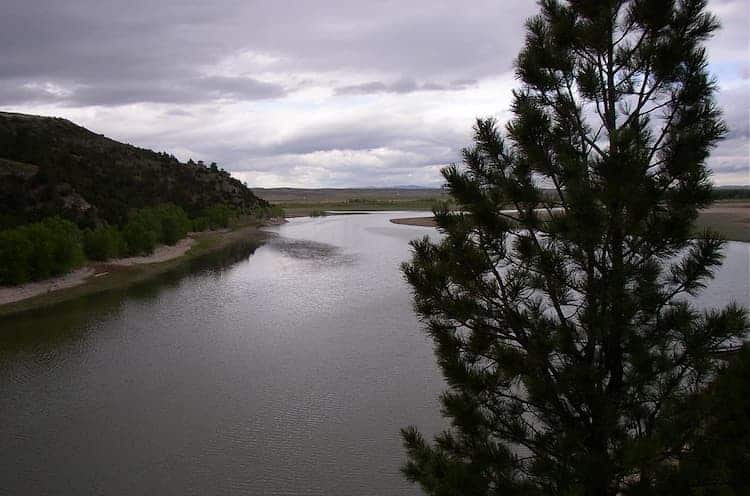
Image courtesy of Wikimedia
Formed by the Glendo Dam, Glendo Reservoir is located within the Glendo State Park in eastern Wyoming. The park is a recreation area managed by the Bureau of Reclamation by Wyoming State Parks and Historic Sites. It features playgrounds, picnic areas, a marina concession, boat ramps, a sandy beach, and nearly miles of trails for mountain biking.
The reservoir is popular for water sports, particularly water skiing, boating, and fishing. Anglers can expect to catch yellow perch, walleye, and channel catfish. The North Platte River above the reservoir is stocked with brown trout and rainbow trout.
There are several interpretive nature trails and scenic overlooks near the reservoir. Visitors can stay at one of 500 campsites within the park for RVs and tents.
5. Lake Alice
Lake Alice is the largest natural lake in Wyoming’s Bridger-Teton National Forest. Sitting at an elevation of 7, 750 f, the 230-acre lake was created by a long-ago massive landslide from Lake Mountain. The lake is popular for seclusion, serenity, and magnificent surroundings. Visitors can only get to Lake Alice by foot, mountain bike, or horseback.
Lake Alice is popular for fishing, hiking, and camping holidays. Get to the Lake Alice Campground by following the trail along the lake’s southern shore about 0.6 of a mile. The campground has nine campsites and a picnic area. Some of the best fishing is located near the picnic area.
6. Lower Slide Lake
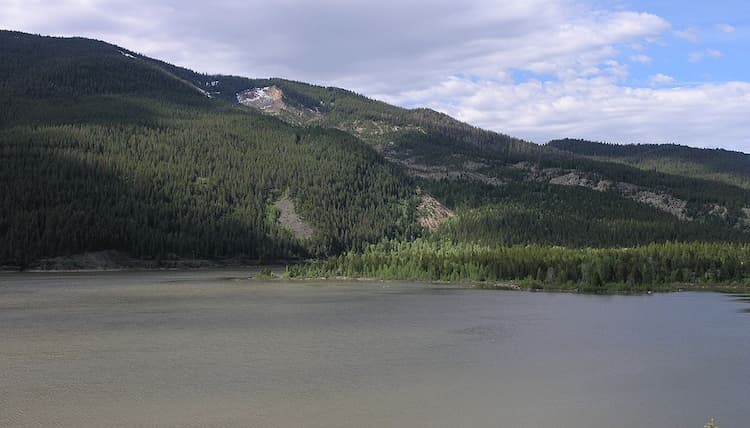
Image courtesy of Wikimedia
Lower Slide Lake is another natural lake within the Bridger-Teton National Forest. Sitting at an elevation of 6,900 ft above sea level, the lake was formed by a landslide in 1925 that dammed the Gros Ventre River. The 642-acre acre lake is loved for its beauty and natural surroundings. Boaters can access the lake by motorboat from the Atherton Creek Boating Site on the northern side or by non-motorized boat at the Slide Lake Boating Site on the western tip.
Fishing is a popular activity at the lake. Anglers can expect to catch Snake River fine-spotted cutthroat trout, lake trout, and mountain whitefish. A peaceful campground for guests with 22 sites and a picnic area is located on the northern shore. Two interpretive sites with lake views and information kiosks attract visitors to the lake.
7. Emma Matilda Lake
Emma Matilda Lake is another gorgeous natural lake within the Grand Teton National Park. It’s named in honor of the wife of one of the first men to hike to the summit of the Grand Teton. The 964-acre lake sits at an elevation of 6,873 ft and is surrounded by vistas of hills and towering peaks.
The lake is only accessible by hiking. The trail is less than a mile and leads to the lake from the car park at nearby Jackson Lake Lodge or Two Ocean Lake. Once at the lake, the Emma Matilda Trail circles around for about 10.5 miles for sweeping views of the lake and the entire Grand Teton Range. Lookout Rock at the southern end is the best spot to stop for views. Hikers are encouraged to have bear spray while hiking.
8. Bradley Lake
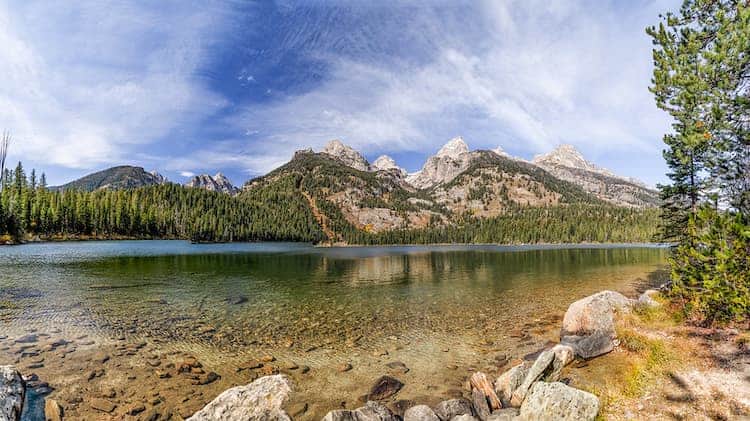
Image courtesy of Flickr
Bradley Lake is a small lagoon-like lake in the Grand Teton National Park. Formed by melting glaciers, the lake is located near the terminus of Garnet Canyon at 7,027 ft above sea level. The lake is only reachable by hiking the Bradley Lake Trail. The trail is 4 miles round trip and begins at the Taggart Lake trailhead parking area.
Not many visitors come to the lake, so it’s the perfect getaway from the hustle and bustle of the city. The scenery is some of the best in the park. There are no campgrounds around the lake’s shoreline. Most visitors use it as a day trip from Beaver Creek.
9. Boysen Reservoir
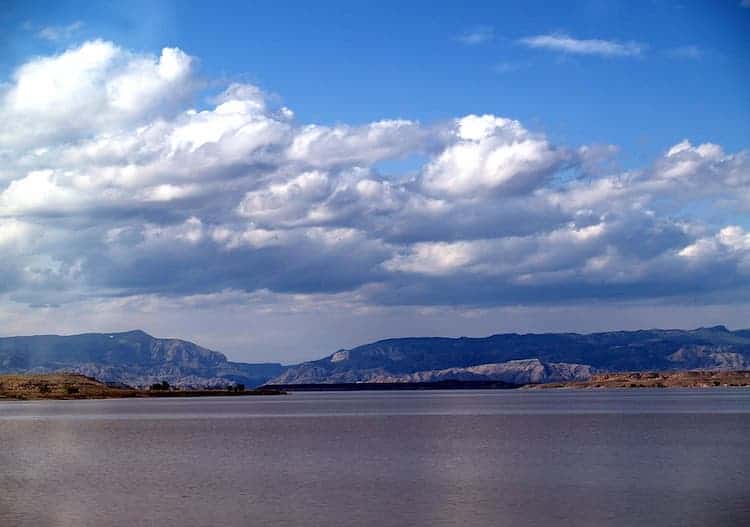
Image courtesy of Wikimedia
Located in Wyoming’s Fremont County near the town of Shoshoni, Boysen Reservoir is a part of Boysen State Park. It’s an excellent lake to visit for recreation. The lake was formed by the earthen-filled Boysen Dam. The original dam, part of which can still be seen, was built in 1908 by Asmus Boysen, and the dam, reservoir, and park bear his name.
The reservoir lake is situated along the Wind River near the Wind River Indian Reservation. The river is the reservoir’s flow source. Together with the park, the lake offers a great variety of outdoor adventures including swimming, boating, fishing, and picnicking. The Boysen Marina on the north tip of the lake offers tubing, wakeboarding, and campsites as well as a bait shop, café, and jet ski rentals. Other campgrounds around the lake have tent and RV campsites. Many of the sites feature amenities like a swimming beach, boat ramp, and playground.
10. Shoshone Lake
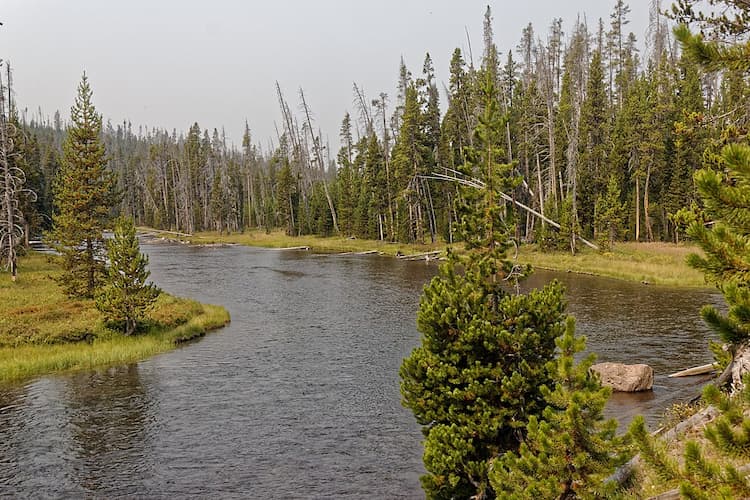
Image courtesy of Wikimedia
Shoshone is a stunning lake in the southwestern part of Yellowstone National Park. Sitting at an elevation of 7,795 ft above sea level, the lake is famous for having the world’s largest concentration of geysers including the Shoshone Geyser Basin at the lake’s southwest end. The Yellowstone Caldera can be seen in the background adding to the lake’s spectacular scenery.
The backcountry lake and the surrounding campgrounds are only accessible by hiking the Continental Divide Trail or the Dogshead/Channel Trailhead. Campgrounds are plentiful with one at Delacy Creek at the north tip of the lake and 19 others stretched along the shoreline.
About the Author Anna Timbrook
Anna is the co-owner of expert world travel and can't wait to share her travel experience with the world. With over 54 countries under her belt she has a lot to write about! Including those insane encounters with black bears in Canada.

