
Last Updated: March 7, 2022
Papua New Guinea Beaches
Despite Earth’s population of 7.9 billion and growing, it’s still possible for world travelers to escape to places relatively unspoiled by human activity. Situated in a picturesque corner of Melanesia off the northern coast of Australia, Papua New Guinea, a part of New Guinea is a paradise recluse in the Southwestern Pacific. Here it’s possible to find old men who remember the first time they saw metal, the traditional culture of feathered headdresses, painted faces, and more than 800 spoken languages.
Papua New Guinea has more than 5,000 kilometers of coastline on the mainland and is surrounded by over 600 islands. With palm-fringed white sand beaches and calm azure seas, sunseekers, surfers, snorkelers, and the curious are rapidly discovering Papua New Guinea Beaches. Major cruise lines like Princess, Carnival, and Silversea are rapidly adding Papua New Guinea to their itineraries while smaller expedition ships departing from Australian cities offer direct trips to explore the country’s coastline and beaches. Let one of them be your next destination.
Table Of Contents
Show All
Panasia Island
Panasia Island is an oasis that is said, in some ways, to belong in the South Pacific near Raratonga and Fiji instead of Papua New Guinea. It’s part of the Louisiade archipelago on the western side of the Calvados chain, a group of 45 islands that includes the major islands of Pana Wina, Bagaman, Motorina, Sabari, and Utien.
The island has all the makings for a perfect tropical getaway including a spacious beach with sugary white sand and the clear turquoise waters of the Solomon Sea. Constant trade winds keep the island’s beach pleasantly cool and free from pesky insects. The clear waters delight snorkelers and divers, and swimming and kayaking are popular activities.
Besides the beaches, Panasia Island features green vegetation and limestone cliffs. Locals grow bananas, coconuts, and papayas in the southern part of the island.
The beach is accessible by boat. First, you must get to the international airport in Port Moresby and then catch a plane to Panasia.
Blanche Bay
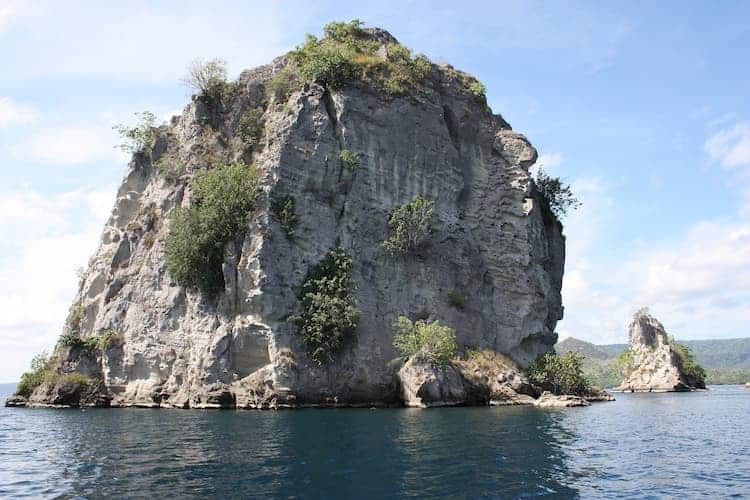
Beautiful Blanche Bay is situated on New Britain, the largest island in the Bismarck Archipelago, part of New Guinea’s Island Region. St. George’s Channel and the northwest corner of the Solomon Sea separates it from the mainland of New Guinea. Kimbe and Rabaul/Kokopo are the main towns in New Britain.
Blanche Bay’s location affords sweeping views of the Duke of York Islands and New Ireland, sunrise and sunset vistas over the water, and a panorama of the Mt Vulcan and Mt Tavurvur volcanoes near Rabul. The stunning views help to make it a popular destination.
At the waterfront, banana boats (speed boats) pull up on the beach’s east end and wait to give rides for a fare or to go fishing. The boats come from all around the province and New Ireland and the Duke of Yorks. The boats add a special flavor to the island. The operators park under the huge trees for shade and hang out playing cards listening to string-band music on their boom boxes.
Milne Bay

Image courtesy of Flickr
Milne Bay is the easternmost inlet on the coast of New Guinea and Papua New Guinea The south and west shores of the bay are fed by the Gumini River making the land fertile to support plantations. The north shore is rugged and steep.
The bay was charted by the Spanish explorer Luis Vaez de Torres in 1606. Captain John Moresby, a British navigator, named the bay in honor of Admiral Alexander Milne in 1873. At the beginning of World War II, the bay was the scene of a battle that became Japan’s first major setback, and it became an Allied base throughout the war.
Today, Milne Bay’s main attraction is diving, thanks to its location near 160 named islands and hundreds of atolls and cays. Alotau, the capital of Milne Bay Province, serves as a base for small charter boats for island hopping itineraries and liveaboard dive boats.
Get to Milne Bay via a domestic flight arriving from Port Moresby directly to Alotau. A shuttle from the airport or a taxi will take you to your hotel or the town center.
Kokopo
Kokopo is a stunning white-sand beach in Rabual, a province of Eastern New Britain about 600 kilometers east of New Guinea. Shade from tall, lush palms and crystal clear waters make it the perfect beach for swimming and picnicking. Kayaking, surfing, and diving are also popular, and dolphins that live in the bay are often spotted. A diving center has been established here to study underwater life.
A backdrop of billowing volcanoes including the famous Tavurvur adds to the scenery and challenge visitors interested in mountaineering. Or simply relax at one of the resorts and hotels with waterfront views. The nearby Kokopo Beach Bungalow offers first-class accommodations.
Kavieng
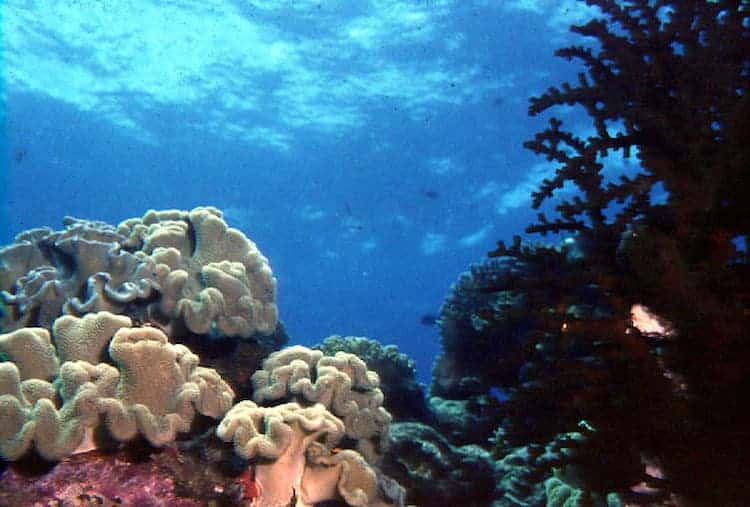
Image courtesy of Flickr
Located in the northern part of the province of New Ireland, the city of Kavieng is characterized by the crystal clear waters of the Bay of Balgai, stunning landscapes, and soft trade winds. Kavieng is a 1.5-hour flight from Port Moresby.
For lots of privacy, visit the small island of Lissenung where you’ll be surrounded by white sand, tall palms, and lush foliage. For accommodations, the Lissenung Island Resort has seven oceanfront rooms with spacious verandas, and there are 10 bungalows about a 15-minute ride from the beach. The Kavieng Niu Lodge, Nusa Island Retreat, and Kavieng Village Resort also have excellent accommodations.
The waters of the Bay of Balgai are perfect for diving where you can explore coral reefs, underwater fauna, the remains of sunken ships, and downed WWII aircraft. The bay is also popular for sport fishing and anglers can expect to catch mackerel, sailfish, and yellow tuna. Many tours operate in the area, and the bay has recently become popular for surfing. But the ghosts of WWII wreckage are still the area’s most popular attraction.
Kavieng’s mountain peaks afford breathtaking views of the islands of the Bismarck archipelago and trekking tours are offered along forest and mountain trails. Regular flights take tourists there from Kavieng and Port Moresby.
Tufi
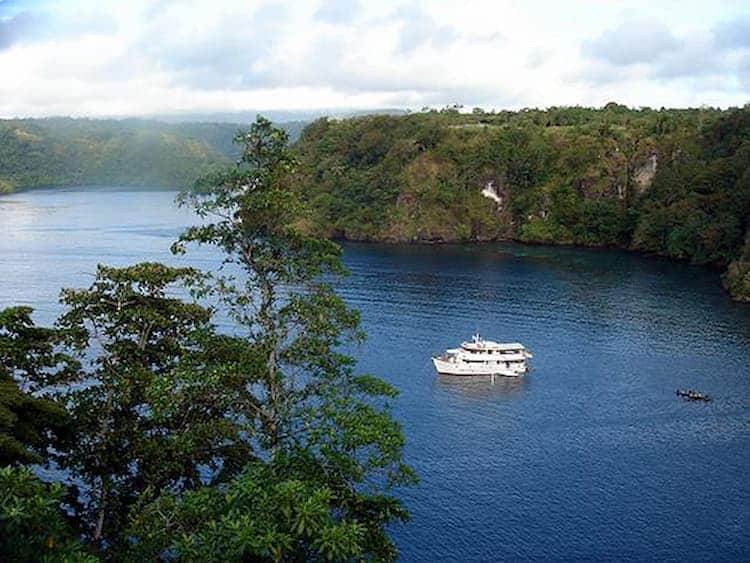
Image courtesy of Wikimedia
Located on the tip of Cape Nelson east of New Papua Guinea, stunningly beautiful Tufi is often called the “Scandinavia of the Tropics.” It’s known for its beachfront as well as mountains that seem to descend into the sea. The town is located on a fjord, or drowned river valley, and surrounded by mountains and 400 kilometers of colorful coral reef. The mountainous hillsides drop down to white-sand beaches.
Tufi is a popular destination for fishing, diving, and snorkeling in the Solomon Sea or simply relaxing on the beaches and fjords. Anglers can expect to catch tuna, mackerel, and barracuda. Rare fish like the white hammerhead can be spotted. Kayaking and boating, coastal walks, and birdwatching are also popular activities.
This remote paradise has modern conveniences at the Tufi Dive Resort, a boutique hotel located atop a fjord with breathtaking views of the sea and surrounding fjords and mountains. Bars and restaurants are nearby where you can enjoy delicious fresh seafood cuisine, tropical fruits, beer, and wine.
About the Author Anna Timbrook
Anna is the co-owner of expert world travel and can't wait to share her travel experience with the world. With over 54 countries under her belt she has a lot to write about! Including those insane encounters with black bears in Canada.

