
How To Get Hot Water In Camper
Not sure how to get hot water in your campervan? You’re definitely in the right place because this guide features all the most popular options for getting hot water in your motorhome!
Solar showers, tankless water heaters, and combi heaters are all popular solutions that people are installing in their van conversions. The ideal solution for you will depend on quite a few things, most notably how much money you’ve got to spend and how much space in your camper have you allocated for a water heating solution.
Read on to see all the best options for getting hot water in a camper and see which one is the best solution for your home on wheels!
Tankless Water Heater
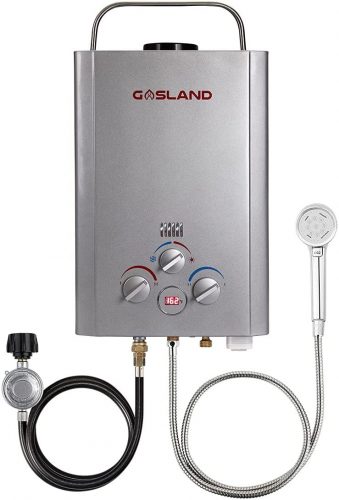
If you want a solution that permanently offers easy access to hot water inside your campervan, a tankless water heater is one of the best solutions. Tankless heaters are great for small spaces because you don’t have to accommodate a big RV hot water tank – instead, you get instant access to hot water thanks to a heater that’s usually very small.
Tankless gas heaters are the more popular choice for RVs and campervans. Although electric tankless heaters are a bit safer and more convenient to use, they’re not a great option for van life because of high power consumption.
Electric tankless water heaters usually consume between 10 and 30 kW, and the lowest power consumption option I managed to find was a 3kW water heater, which is likely still more than all your other RV amenities combined.
Tankless gas water heaters have lower power consumption, which is why they’re the more popular choice among van lifers. The only issue with these RV water heaters is that you have to keep the space ventilated when they’re in use. It’s smart to get a carbon monoxide detector for your camper, just to be on the safe side.
It’s important to note that tankless water heaters (both electric and propane) have become extremely popular. This means that you have dozens, if not hundreds of options in different price ranges, so it shouldn’t be too hard to find one that’s exactly right for you.
Gas/Electric Water Heater
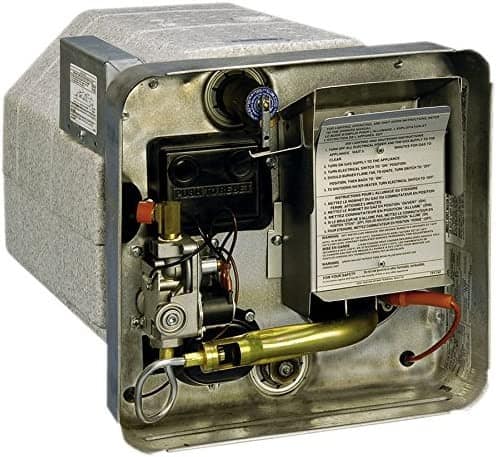
Gas and electric hot water tanks are some of the simplest solutions for getting hot water into an RV. Gas water heater tanks are more popular among van lifers because they’re more suitable for life on the road.
Although electric heaters are a bit safer, they use a lot of electricity to heat the water. This means that you can only really use them on days when you’re going to be driving a lot and you’re certain you’ll be able to replenish the power that the electric water heater is using.
Also, it takes electric heaters a while to heat the full tank, so they’re not quite as efficient as gas heaters. If you have a 6-gallon electric water heater, it needs 30-45 minutes at least to heat up the entire tank, which might be able to get you two showers. If you’ve got kids to bathe or are traveling with friends, you’ll have to waste time just waiting for the water heater.
Propane water heaters are a bit more efficient because they don’t use as much electricity and they are a bit quicker than electric water heaters, thanks to their internal burner. They’re more common in RVs, and a good option if you are specifically looking for a solution that will allow you to store hot water inside your campervan.
The major downside of propane water tanks is that you need a constant supply of propane to keep them running. Also, they’re not really supposed to be used in enclosed spaces because of the buildup of fumes. So, if you are going to put anything that works on propane inside your camper, just do yourself a favor and get a CO detector – it might just save your life.
Boil Water
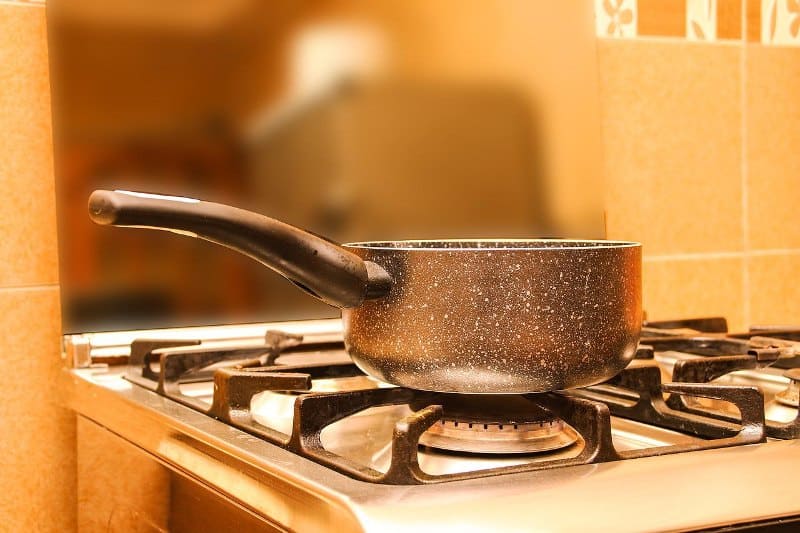
The quickest and easiest way of getting hot water in a campervan is to just boil water on the stove. This is great when you’re in a pinch and you need hot water immediately, plus you generally don’t need to invest a penny more in your van, if you’ve already got a stove and some pans. Even if you don’t have a stove, you can light a fire and heat the water over it.
The main advantage of this method is that you usually aren’t wasting any water because you can heat up the exact amount of water you need to do the dishes or shower. This works for quick sponge baths and you can also transfer the hot water from the pan into a camp shower.
The downside of this method is pretty obvious – you won’t have hot water in your campervan on demand. Instead, you need to go through the process of heating up water whenever you need it, which can get tiring rather quickly. Also, this isn’t the best solution if you’ve got children or pets running around your campervan.
Solar Shower
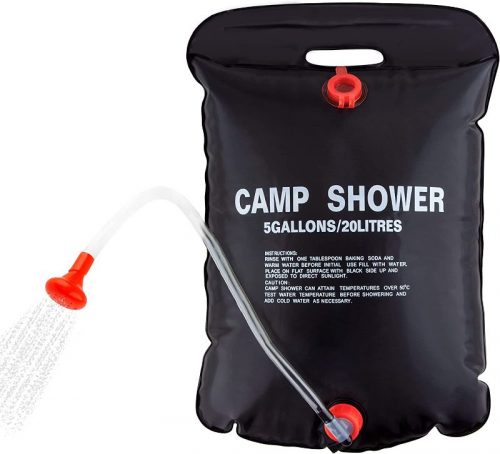
A solar shower is a great solution for vanlifers who don’t want to install a proper shower or a water heater tank in their campervan. Maybe you don’t have enough space or you just don’t want to waste the space in your home on wheels on a shower – a solar shower sits on the roof of your vehicle and you can use it inside and outside the van.
The best thing about a solar shower is that it doesn’t require any power or electricity to heat the water. The sun does all the work, and this solution is great for vanlifers who spend most of their time on the road during the warmer months.
Solar showers are made in many different shapes and sizes, so you could potentially get one that’s big enough to replace an RV hot water heater. Also, solar showers usually have a shower head with a release button – the hot water will run down only when the button is pressed, so you are in full control of how much hot water you are using.
The downside of solar showers is that they’re not really a great option year-round. It’s much more difficult to heat the water in the colder months, plus outdoor showers in the dead of winter aren’t really an option either. You always have the option of heating up water on the stove and transferring it to the camp shower.
It guarantees you a hot shower, but bear in mind that transferring the hot water to the camping shower isn’t the easiest thing to do without spilling anything.
It’s worth noting that you can just buy a solar camp shower and mount it on the roof, or you can make one yourself. You just need a water storage tank that’s going to sit on the roof, a hose, and a showerhead. The shower bag should be made from a material that conducts heat well so that it doesn’t take forever for solar energy to heat the water.
Diesel/Gas Combi Heater
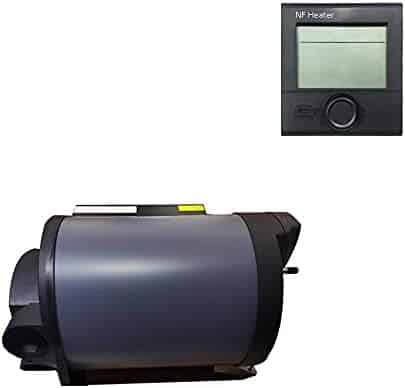
A combi heater is a great option if you’re looking for a solution that can heat water and the living space at the same time. Combi heaters pull cold water from your fresh water tank, heat it, and store it in the tank that comes with them. The part of the heater that emits warm air to heat up the space inside the camper is separate from the water tank and the main unit.
The main unit of a combi heater is meant to be mounted on the outside of the vehicle, while the water tank and the heating element should be inside the vehicle. It’s important to note that both diesel and gas combi heaters have a lot of elements and they can only be installed by professionals, due to safety concerns.
Another thing diesel and gas combi heaters have in common is that they’re both notoriously expensive. This is one of the priciest solutions for getting hot water in a camper, so consider this only if you’re going all out on your motorhome.
Diesel combi heaters are a bit more popular among vanlifers because they don’t require a propane hookup in your vehicle. They’re connected to your camper’s fuel tank, so they’re a tad safer than combi heaters operating on propane.
On the other hand, a gas combi heater doesn’t impact the fuel efficiency of your vehicle as much, and it’s a decent solution if you’ve already got other appliances running on propane inside your campervan.
Calorifier Tank
A calorifier tank is a good option for an RV water heater. It doesn’t have a burner; instead, it uses the heat from the engine to heat up water. It’s a great solution for motorhomes because it doesn’t require any additional energy apart from the one you’re already producing.
The calorifier tank has an internal coil that connects to the coolant line of your engine. The engine heats up as you’re driving the motorhome, and the coolant line draws that heat away from the engine and through the coil in the tank.
The water heats up as it passes through the coil, and heat then flows back to the engine through the radiator. It doesn’t take too long to warm up the water – some 20-30 minutes on the road and you’ll have a tank full of hot water.
A calorifier tank is capable of keeping the water hot for hours, and some have an electric heating element as a backup so that you can have instant hot water even in extremely cold weather. The main issue with this method is that you won’t have access to hot water if you’re parked somewhere for days at a time.
Log Burner
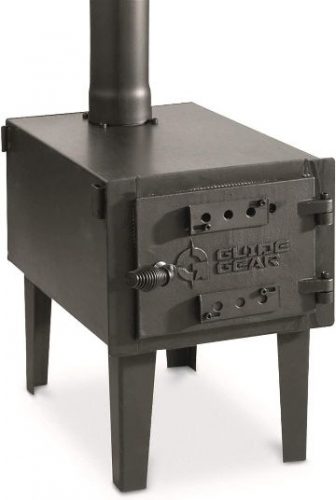
A log burner or a wood stove is an interesting solution that can heat up both cold water and the space you are living in. Wood stoves add a rustic element to your RV and they’re great for people who often go RVing in colder places or during the winter. They can look amazing in your camper, but they do take up quite a bit of space.
Installing a log burner water heater in an already converted campervan is a lot of hassle, so consider this if you’re still in the process of converting your van. You need to make room for a chimney, you have to leave plenty of space between the log burner and the walls/roof of the RV, and you need to make sure that the area around the stove is well insulated.
The main advantage of wood stoves for RV is that they simultaneously heat up the space and the water, so you’re not wasting any energy. That’s also the main disadvantage – imagine having to light a fire inside your campervan in the middle of the summer, when your camper is already overheating because it’s 100 degrees outside.
Another thing to note is that wood-burning stoves aren’t the easiest to install on your own inside a camper. You need to have a basic understanding of plumbing and heating, plus you need to make sure that you’re getting the right materials. It’s best to hire a professional to do this for you, and that can get pricey, especially considering that log burners are already an expensive piece of equipment for a campervan.
Hot Water Tap
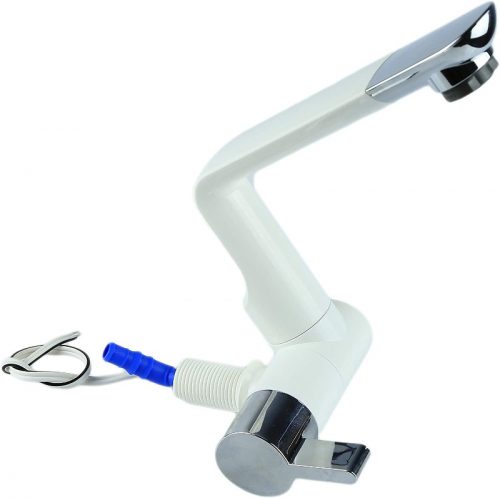
Consider a hot water tap in your campervan if you haven’t got space to put in a proper water heater tank. It uses the cold water from your fresh water tank to provide you with hot water instantly. Also, hot water taps are usually low pressure and they don’t use a whole lot of water.
Hot water taps are often used in households and they’re not exactly a traditional solution for a campervan. They do consume quite a bit of electricity, with the Delimano hot water tap using around 3kW to provide instant, 60°C water. That’s as much as an electric water heater, so keep that in mind if you are considering this option.
The main advantage of a hot water tap is that it takes up virtually no space in your campervan. Just put it in the place of the faucet you already have installed and that’s it! Setup is extremely easy, and access to hot water is practically instantaneous.
A few things to note are that most hot water taps can’t heat up the water above 60°C. Some can produce boiling water, but they consume too much electricity to be suitable for use in a motorhome.
A hot water tap is great for doing the dishes and you can even use it to shower if just get yourself a shower hose that connects to the faucet.
About the Author Anna Timbrook
Anna is the co-owner of expert world travel and can't wait to share her travel experience with the world. With over 54 countries under her belt she has a lot to write about! Including those insane encounters with black bears in Canada.
