
Atom AR vs Atom LT – Two Jackets Compared
PRODUCT COMPARISON

Atom AR
The ATOM AR is an incredibly versatile hoodie that can be worn as a mid-layer on chilly days but provides enough weather protection to be worn as an outer layer too. The powerful synthetic insulation not only keeps you warm even when wet but also packs down into a tiny bundle. Its combination of warmth, weather resistance, and other clever features, such as a helmet-compatible hood, means that you'll want this jacket with you whether you're skiing, climbing, or hiking.- Weight: 420 g / 14.8 oz
- Materials:
- Nylon with DWR (Durable Water Repellent) finish
- Synthetic Coreloft insulation
- Construction: Composite construction

Atom LT
THE ATOM LT is a super lightweight and compact mid-layer that can be used for a whole range of sports. The synthetic insulation will keep your core warm, but don't worry about overheating when you're active - the excellent ventilation will keep your temperature steady. Its light weight and casual appearance make this one of Arc’teryx's most sought-after jackets, and it's just as popular among city dwellers as it is outdoor enthusiasts.- Weight: 315 g / 11.1 oz
- Materials:
- Nylon with DWR (Durable Water Repellent) finish
- Synthetic Coreloft insulation
- Construction: Composite construction with breathable, stretch side panels for enhanced comfort and mobility
Arc’teryx is a Canadian company with a highly prestigious reputation for producing top-quality outdoor clothing. They specialize in garments designed for climbing, skiing, and other alpine activities but, thanks to the casual appearance of lots of their clothes, you can often spot their products on people the street as well as in the mountains.
Here, we’re going to compare two of Arc’teryx’s most popular outdoor hoodies – the ATOM All Round (AR) and the ATOM Lightweight (LT). All products in the ATOM range are designed to be versatile mid-layers that will keep you warm and protected from the elements while carrying out a range of activities.
However, despite some similarities, there are key differences between the AR and the LT. Generally speaking, the AR provides more warmth and overall weather protection, whereas the LT is lighter, better ventilated and people tend to find it more comfortable.
Deciding which one is right for you is no easy decision, especially as they aren’t the cheapest jackets around, so let’s take a look at some key performance considerations so you can weigh up which one is right for you.
Warmth
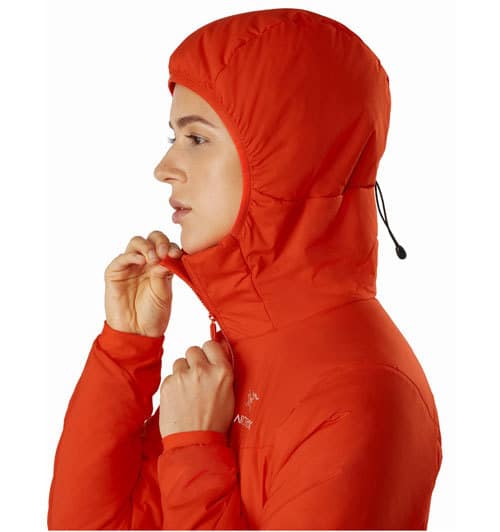
Both the ATOM AR and the ATOM LT are filled with Coreloft synthetic non-woven insulation. The polyester staple fibers are designed to trap pockets of warm air and hold them close to your skin, minimizing the loss of precious body heat. On top of that, another major selling point of synthetic insulation is its hydrophobic nature, which means it repels water and therefore can keep you warm even when wet (unlike down insulation).
Although both the AR and LT have the same synthetic insulation, that’s where the similarities end in terms of warmth. The AR is packed with 120g/m of insulation along the body, 80g at the underarms, and 60g around the hood, whereas the LT has just 60g all over. Oh, and the AR has an adjustable hem drawcord to further trap any hot air that tries to escape, unlike the LT.
This extra insulation makes the AR considerably warmer than the LT and makes it’s a better choice for when you’re recuperating at base camp. Having said that, if you’ll spend most of your time on the go, then a slightly cooler mid-layer such as the LT provides more than enough warmth.
Breathability
Although you want your mid-layer to keep you nice and warm while you’re having a tea break, setting up your gear, or studying a map, we all know that once your heart starts thumping, it’s only a matter of time until the sweat drops follow.
That’s why finding clothes that can keep you warm and vent some of that hot air is so important. Although the Coreloft insulation used in the AR and LT is warm and resilient, it’s also surprisingly breathable too.
However, it’s the air-permeable fleece stretch side panels that make the LT the clear winner in terms of breathability. If you’ll be wearing your mid-layer during strenuous activities, then this is definitely the jacket for you.
Materials

Let’s look at what else they’re made of. Both the AR and the LT are constructed of 100% nylon, but the AR has a Tyono™ 30 denier shell, whereas the LT has a 20 denier shell. Denier is a term used to describe the thickness of a material fiber, so the higher the denier the thicker the fabric. Although a thicker fabric will be more resistant to abrasion and other damage, it will also weigh more.
Deniers of 20-80 are common for outdoor clothing, but those at the higher end of the spectrum are more rigid and used less for highly active sports. Although both garments are at the lower end of this range, Tyono nylon is known for providing a high level of protection even at low deniers. The slightly higher denier of the AR means that it offers a great level of protection than the LT.
On top of that, all hoodies in the ATOM series are treated with a DWR (durable water-repellent) finish. Although this makes both products moisture resistant and able to stand up to light precipitation, neither is entirely waterproof. We wouldn’t expect a mid-layer to be entirely waterproof, but it’s good to know if you get caught out in the rain you have some protection while you rummage around in your pack for your raincoat.
Packability
The synthetic insulation used in both the AR and LT hoodies not only keeps you warm but also compresses nicely too (although not as much as down insulation would). The fact that there is less insulation overall in the LT means that it inevitably folds away into a smaller bundle, making it easier to pop into your bag when not in use – in fact, it compresses so well that you can even fold it away inside its own pocket.
Less filling also means less weight… so less filling, plus the use of a lighter shell (20 denier not 30), means that the LT is 3.7 oz lighter than the AR in total. Overall, if you’re after a minimalistic mid-layer that will keep you warm but won’t weigh you down, then we’d have to recommend the LT over the AR.
Value for Money
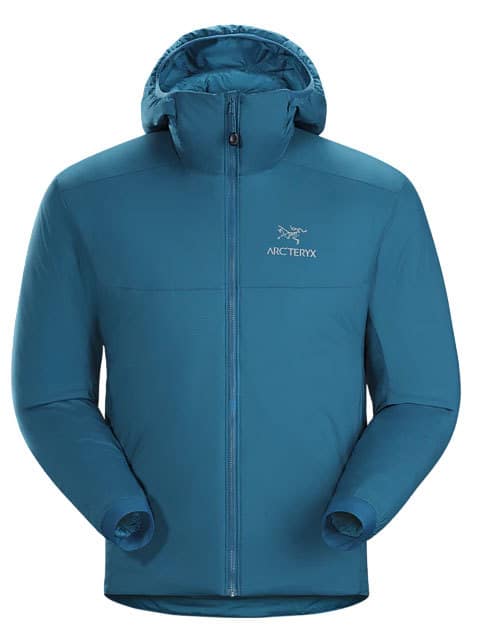
So, which hoodie offers the best value for money? Well, this is a tough call. Mid-layers that come with serious insulation often come with serious price tags, but the high-end lightweight outdoor gear isn’t cheap either.
The AR is the more expensive of the two options, by about 50 bucks (depending on where you look), but the extra padding and tougher fabric mean it doubles up as an outer layer in warmer conditions as well as a mid-layer in cold ones. The LT is less expensive, and we love how breathable and lightweight it is, but it certainly isn’t intended to be used as an outer layer in its own right.
Overall, we reckon that the value for money is roughly equal. Pay a bit more and get something warmer that you can use on its own or as a mid-layer, or go for the cheaper option for an ultra-light mid-layer only.
Final Thoughts
The ATOM AR and the ATOM LT are both fine examples of versatile mid-layers that will keep you warm but won’t weigh you down or cause you to overheat.
The main advantages of the LT are its breathability and lightness, although this does come at the price of reduced insulation. If you’ll be undergoing super strenuous activity and want to avoid sweating up under your outer layer, then the LT is the way to go for sure.
However, if you’ll be hiking or doing more static sports, then you’ll probably appreciate the extra warmth that the AR offers. It also has a tougher shell, and this extra warmth and protection mean you can wear it on its own in warmer alpine conditions, or even just as an urban jacket. It does come with a heavier price tag though, and you can definitely get away with the LT under a super warm outer layer.
So, if you’re super keen to avoid sweat, shed some extra pounds, and free up some pack space, go for the LT. If warmth is your top priority, and you’re keen for some added protection, then it’s worth investing in the AR.
Either way, these are both fantastic hoodies that will keep you warm, ventilated, and comfortable throughout a range of sporting activities- whichever one you go for, you certainly won’t regret it!
