
Patagonia Vs. Arc’teryx: Who Makes The Best Outdoor Gear
Wondering who makes the best outdoor gear: Patagonia or Arc’teryx?
They are both excellent brands and in this detailed comparison, we will take a look at their most popular products and put them against one another, in order to see if one brand really is better than the other.
Some people swear by Patagonia and love their environmental stance, others think Arc’teryx is better.
At A Glance: Featured Products From Patagonia And Arc'teryx
- Best Insulated Jacket
Patagonia Nano PuffJump To Review - Best Waterproof Jacket
Arc’teryx Beta SL Hybrid JacketJump To Review - Best Mild Weather Jacket
Arc'teryx Gamma MX Jacket Jump To Review - Best Outdoor Backpack
Patagonia Altvia Pack 22LJump To Review
Both of these brands have some amazing gear. So, read on to find out which is the best.
Top Product Overview
 | Best Insulated Jacket
| SEE LATEST PRICES → |
 |
| SEE ON REI →SEE ON AMAZON → |
 |
| SEE LATEST PRICES → |
Best Waterproof Jacket
| SEE ON REI →SEE ON AMAZON → | |
 |
| SEE LATEST PRICES → |
Best Mild Weather Jacket
| SEE ON REI →SEE ON AMAZON → | |
 | Best Outdoor Backpack
| SEE LATEST PRICES → |
 |
| SEE ON REI →SEE ON AMAZON → |
Top Products
Patagonia Nano Puff

Patagonia’s Nano Puff collection features some of the lightest insulated jackets you can get your hands on. Nano Puff items are all water-resistant, windproof, and insulated with Primaloft – the best kind of synthetic insulation there is.
Patagonia uses Primaloft Gold Eco in this collection, which is designed specifically around retaining warmth in wet conditions – something you can only dream of with regular down insulation.
The Eco version of this insulation is made from 55% recycled materials, meaning that all of the Nano Puff items are in fact environmentally friendly. Especially with the jacket shells that are made from recycled polyester.
Another great thing about the Nano Puff jackets and hoodies is that they are all lightweight and packable. They usually fold into one of the pockets, making them super easy to pack and carry everywhere. If you just want to have an extra layer of clothing in your backpack, any of the Nano Puff jackets is a great option that will take up virtually no space in your bag.
Now, onto the downsides. This collection from Patagonia focuses on keeping you warm and not really on protecting you from the elements. While the jackets are all windproof, they aren’t really waterproof. Which means that they will get wet and soggy in heavy rain – although the insulation is able to keep you warm even in such conditions, nobody actually feels comfortable in a wet and soggy jacket.
The Nano Puff items work best as a middle layer – something you will wear over your t-shirt, but under a waterproof outer layer. They actually pair really well with the brand’s Torrentshell jackets that are 100% waterproof, but don’t have any insulation. You can read more about those jackets if you scroll a bit further down.
Pros
- Primaloft Gold insulation performs great in wet weather
- Very lightweight and packable
- Made from recycles materials
Cons
- Not waterproof
- No hood
Product Information
- Outer Shell: 100% recycled polyester
- Insulation: 60-g Primaloft Gold
- Weight: 11.9 oz
Arc'teryx Cerium LT Jacket
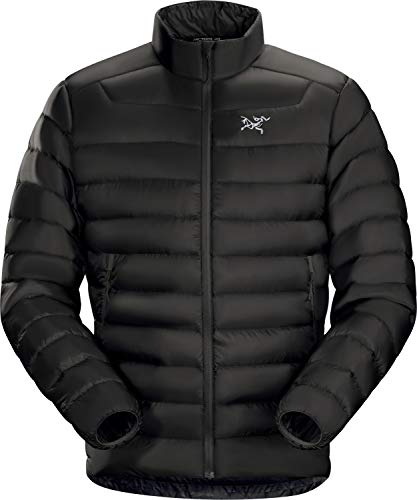
The Cerium jacket from Arc’teryx is another excellent example of a warm and packable jacket. It is insulated with a mixture of down and synthetic insulation, for great warmth and performance in various weather conditions.
The main insulation in the jacket is 850 fill power goose down, which is the best and most expensive kind of insulation that exists. It’s exceptionally warm, so much so that it is often used in gear for polar expeditions.
However, even the best goose down will clump up if it gets wet, which practically eliminates its warmth trapping capabilities. The Cerium jacket deals with this by having Coreloft synthetic insulation in strategic places that would get wet first.
But even with that, you still wouldn’t stay warm for too long in heavy rain. And considering that this jacket isn’t waterproof but only water-resistant, you would definitely need an extra outer shell.
This jacket is exceptionally lightweight at only 9.9 ounces, and it packs into one of its pockets. It’s a great layer to have stashed away in your backpack when you’re doing longer hikes and need something for sudden weather changes. You won’t even feel it in your bag and it barely takes up any space.
The only downside of the Cerium LT is the price – it costs nearly twice as much as the Patagonia Nano Puff, and that’s a bitter pill to swallow. Granted, it does use more expensive materials, but is really that much better than Patagonia’s alternative? I don’t think so, but ultimately that’s your decision.
One thing worth noting here is that Arc’teryx does offer a version of a mid-layer jacket that features only synthetic insulation – the Atom LT. However, that jacket is still pricier than Patagonia’s option, and it uses Coreloft insulation, which is not quite as great as Primaloft Gold.
Pros
- Uses both synthetic and goose down insulation
- Lightweight and packable
- Arato 10 nylon shell with DWR coating
Cons
- Very expensive
- No XS option available
- Not waterproof
Product Information
- Outer Shell: Arato 10 nylon
- Insulation: Coreloft synthetic insulation; 850 fill power goose down
- Weight: 9.9 oz
Patagonia Torrentshell 3L

The Torrentshell 3L jacket is Patagonia’s best outer layer hands down. It features 3 layers of H2No technology to ensure you stay dry even if you walk through a waterfall. But the jacket doesn’t have any insulation and it won’t do much in terms of keeping you warm. Because of that, it works best when paired with an insulated middle layer like the Nano Puff jacket.
Patagonia’s Torrentshell jacket is lightweight, packable, and very breathable. With zippers in strategic places, you can easily let some of the hot air out and cool yourself down a bit if you ever get too hot.
And the drawcord at the hem is also helpful here – you can tighten it completely if you really want to trap the heat, or you can loosen it up if you want to let some cold air inside the jacket. These features also make it easier for people with different body types to get the best fit.
The neck of this jacket is lined with fleece, which actually helps trap the heat inside the jacket. It also feels soft and warm against your skin and creates an additional waterproof barrier. On top of that, the Torrentshell also features an adjustable hood with a laminated visor, for even better protection from the elements.
The entire jacket stuffs into the left-hand warming pocket, making it ultra-packable. It weighs less than a pound, so you can easily carry it wherever you want without feeling weighed down one bit. And the best part is that it will just fit into your favorite backpack, taking up less space than a hydration bladder.
Pros
- Packs into one of the pockets
- Entirely waterproof
- Breathable
Cons
- No insulation whatsoever
- Hood is not removable
Product Information
- Outer Shell: 3-layer H2No shell
- Insulation: None
- Weight: 13.9 oz
Arc’teryx Beta SL Hybrid Jacket
The Beta jacket features an outer shell made from Gore-Tex fabric, which is the absolute champion of breathability and waterproofing. It outperforms Patagonia’s H2No by miles, and in that sense, the Arc’teryx is by far the better option. The only aspect in which Gore-Tex is not as good as Patagonia’s in-house fabric is comfort.
Gore-Tex tends to be really stiff, so it’s not very comfortable to wear. However, if you’re going to wear the shell jacket over an insulated mid-layer, you won’t really feel that too much. The comfort is only an issue if you plan to wear the shell over a t-shirt or something really thin.
This jacket is also extremely lightweight at only 12.7 ounces, and it’s easy to carry everywhere. Unfortunately, it’s not one of those jackets that packs into its own pocket, but I highly doubt that’s a deal-breaker considering all of the other excellent features of the jacket.
The Beta features multiple ventilation zippers in strategic places, allowing you to control exactly how warm you want to be. It also has zippered pockets for the items you want easily accessible at all times, and it comes with a helmet-compatible storm hood.
All of the zippers of the jacket are waterproof, which is pretty amazing. The Beta SL jacket also has adjustable cuffs and hem, which will keep out the wind fully when they are properly tightened. They also allow you to customize how to jacket fits, ensuring it’s equally comfortable for people of different body types.
The only downside is the price. It’s a very expensive jacket, nearly three times pricier than Patagonia’s Torrentshell, but it’s certainly not three times better than that jacket.
Pros
- Gore-Tex membrane is highly breathable and waterproof
- Adjustable cuffs and hem
- Ventilation zippers
Cons
- Very expensive
- Doesn’t pack into its own pocket
Product Information
- Outer Shell: N40r Gore-Tex fabric
- Insulation: None
- Weight: 12.7 oz
Patagonia R2 TechFace Jacket

The R2 TechFace jacket is Patagonia’s version of a versatile mild-weather jacket. It works great as a mid-layer in cold weather, but also on its own in chilly evenings or mornings. The weather-resistant jacket is warm and breathable, making it an excellent option for long days in the mountains.
It’s not a fully waterproof jacket, but that’s never the case with outerwear made from soft fabrics. It is water-resistant though and it can keep you dry in some light rain and snow, thanks to the DWR coating. The jacket is made from a high-loft fabric with excellent breathability that is very soft, ensuring you’re very comfortable when wearing the R2 TechFace jacket.
This Patagonia jacket features five pockets total – two hand-warming pockets that are high up so that you can easily access them when you’re wearing a hip belt, an extra zippered chest pocket, and two drop-in pockets inside. The internal pockets are big enough to hold water bottles, which is pretty great.
The cuffs are stretchy but they aren’t adjustable and that’s a shame. You also can’t do anything about the hem – it’s either going to fit well or it’s not. But if you get the jacket in your usual size, you shouldn’t have any problems getting the right fit.
Those are the two main downsides of this lightweight Patagonia jacket. I’d also add the fact that it doesn’t come with the hood, but that’s usually the case with these mid-layers. At least it’s not very expensive – with a retail price of a little more than $150, it’s a lot cheaper than anything similar from Arc’teryx.
Pros
- Lightweight and breathable
- Warm and water resistant
- Internal and external pockets
Cons
- Cuffs and hem not adjustable
- No hood
Product Information
- Outer Shell: High-loft double-weave fabric with DWR coating
- Insulation: None
- Weight: 3.4 oz
Arc'teryx Gamma MX Jacket
The Gamma MX jacket is an excellent softshell option for changing weather. It’s great for those days when you’re on the trail the entire day and need that extra bit of warmth in the morning and evening.
This Arc’teryx jacket is weather-resistant, but it is not fully waterproof. It will stay dry in light rain and it is very breathable, which ensures that you’re always comfortable in the Gamma jacket. On top of that, the fabric of the jacket is abrasion resistant so it’s great for rough surroundings – if you need something for rock climbing or forest hikes, this is a great option that won’t get torn easily.
Also, the Gamma is a great option if you need something that’s not very restrictive. It is very articulate thanks to the stretchy materials, so it will actually move along with your body.
Another thing I love about the design of this jacket is the placement of pockets. There are two sets – chest pockets with hidden zippers and hand-warming pockets that are higher up than usual.
The placement of the lower pockets is such that you can easily access them even if you have a waist belt on, which just shows that a lot of thought went into the design of the jacket. This Arc’teryx jacket also features pockets on the arms, for items you want to keep separate from the rest.
The hem and the cuffs of the Gamma are both adjustable, which helps keep the wind out. It also allows the jacket to fit well on different body types for premium comfort.
The only thing that I think is a downside is that there’s no hood on the jacket. There is another version of the Gamma that has a hood, but that one features a slightly different design with less pockets and a higher price point.
Pros
- Very breathable
- Stretchy fabric is not restrictive
- Adjustable cuffs and hem
Cons
- No hood
- Pricey
Product Information
- Outer Shell: Fortius 2.0 fabric with DWR
- Insulation: None
- Weight: 1 lb
Patagonia Altvia Pack 22L

Altvia Pack backpack from Patagonia is easily the brand’s best selling option and for all the good reasons. Its 22-liter capacity is just enough for day-hikes, with plenty of external storage for overnight adventures when you can pack light.
The pack is actually available in a variety of different sizes, ranging from an 14-liter daypack to a 28-liter bag. But the 20-liter option is by far the best for day hikes, in terms of capacity, carrying comfort, and bag weight.
The top-loading pack features a spacious main compartment with several outside pockets for easy organization, zippered hipbelt pockets for items you want most easily accessible, and stretchy pockets on the sides and the front panel.
It is made from durable 100% recycled nylon which is naturally water-resistant. And there is a built-in rain cover for when it really pours down!
The back system is padded, ventilated, adjustable, and equipped with a sternum strap and a hip belt. Also, the sternum strap is attached to the daisy chain webbing and you can actually adjust its position, which is very convenient.
This backpack has side compression straps that allow you to cinch in the main compartment for better load distribution when the pack is not at full capacity. Additionally,there is a huge stretchy front pocket in place – if you want to put something big and bulky in there, you just have to loosen up the straps as much as you can.
Pros
- Breathable and adjustable back system
- Rain cover included
- Spacious interior
Cons
- Not a lot of pockets inside
Product Information
- Dimensions: 19.5" x 11" x 9.25"
- Weight: 679 g (24 oz)
- Capacity: 22 liters
Arc'teryx Arro 22 Backpack
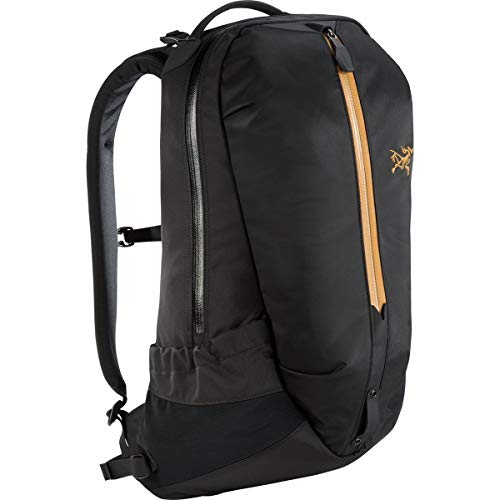
The Arro 22 backpack is the most iconic bag from Arc’teryx. It is an incredibly versatile backpack that works for both urban environments and light days in the mountains, as well as the occasional overnight trip. It is made from weather-resistant nylon and it features waterproof zippers, for excellent performance in different weather conditions.
With a capacity of 22 liters, the Arro pack will fit everything you need for light day hikes. It is a hydration bladder compatible with a bladder compartment that features a tube port and attachment points on the shoulder straps that allow you to secure that tube in place. The pack also features a 15” laptop compartment, for those days when you’re only exploring the urban jungles.
It is a classic front-loading backpack with a kangaroo pocket, stretchy side pockets, and multiple external attachment points. The backpack also features ergonomic shoulder straps with really thick padding, as well as a height-adjustable sternum strap. The backpanel is also heavily padded, ensuring you will stay comfortable even when the bag is at full capacity.
On top of all that, the harness is also height adjustable, allowing everyone to make the backpack fit their bodies perfectly. The only thing I don’t really like about the bag is the lack of breathable mesh on the backpanel – it means that the breathability is not the best, so you might sweat more than you’d like.
Also, the hip belt is just a thin webbing strap. There’s no padding, and sadly it doesn’t feature any pockets for those items you like having extra handy.
Pros
- Hydration bladder compatible
- Very versatile backpack
- Harness is height adjustable
Cons
- No breathable mesh on backpanel
- Hip belt is just a webbing strap
Product Information
- Dimensions: 21.7” x 11.8” x 9.8”
- Weight: 2.25 lbs
- Capacity: 22 liters
What To Look For In Arcteryx vs Patagonia
Waterproofing: Gore-Tex Vs. H2No
When comparing Arcteryx vs Patagonia, it makes sense to have a closer look at their materials and fabrics.
Arc’teryx and Patagonia both have preferred fabrics when it comes to waterproof outer shells. Patagonia uses their in-house fabric H2No, which allows them to offer better prices on their waterproof clothing. Arc’teryx, on the other hand, usually uses Gore-Tex – the champion of breathable and waterproof fabric.
That’s one reason why Arc’teryx items are usually more expensive – Gore-Tex fabric is pricey. But Gore-Tex is top of the line, and if you really want the best you have to pay the price.
While H2No is a great waterproof and breathable material that performs really well, it’s not as good as Gore-Tex. Let’s crunch the numbers, so you’ll have a good idea of what I’m talking about.
Waterproof fabrics all have a waterproof rating, which determines just how much moisture they can handle before they start getting wet. With items that are rated as waterproof, that number is usually very high.
Waterproof Rating
- Patagonia’s H2No has a rating between 10.000 – 20.000 mm
- Arc’teryx Gore-Tex starts at 28.000mm and go up
Patagonia’s H2No has a rating is a lot less than the lowest rating of Gore-Tex. Of course, it is typically cheaper, but it is worth knowing where you stand.
Keep in mind that the construction of the jacket is just as important as the waterproof rating. If it’s not seam sealed then it’s going to let water in eventually, even if we are talking about Gore-Tex.
There’s also a breathability rating, which basically tells you how much you’re going to sweat in any given jacket.
Breathability Rating
- Patagonia H2No fabric has a breathability rating of 12.000 – 15.000 g/m2
- Arc’teryx Gore-Tex again outperforms with a rating of 15.000 – 25.000 g/m2
If you are looking for items that can handle a lot of water but are still breathable then just stick with Arc’teryx. Even though Patagonia has more attractive prices, its in-house materials just can’t compete with the genius of Gore-Tex.
Insulation: Coreloft Vs. Primaloft

Coreloft is synthetic insulation developed by Arc’teryx. It’s a great type of synthetic insulation, but the thing is it can’t really compete with Primaloft Gold. Coreloft is better than some simpler instances of Primaloft insulation but it doesn’t really come close to the best types of Primaloft that exist, and which happen to be used frequently by Patagonia.
Primaloft Gold insulation is able to retain 98% of warmth when it gets wet. While Coreloft does have pretty good performance in wet conditions, it’s definitely not that great. On top of that, Primaloft Gold just does a better job at trapping heat and it has a really high warmth to weight ratio, which means that Patagonia doesn’t need to put in a lot of insulation to make their jackets exceptionally warm.
Don’t get me wrong – Coreloft is an excellent type of synthetic insulation, it’s just not as good as the best one on the market. It’s kind of like comparing a Lamborghini and a Rolls Royce – both are incredible vehicles, but the Rolls is a class of its own.
Another thing that bugs me here is that Arc’teryx actually manufactures their own synthetic insulation, and yet their products are more expensive than the Patagonia counterparts. It doesn’t make a lot of sense, especially considering the fact that you’re actually getting higher quality products from Patagonia, and for less money at that.
Pricing
For many people, it all comes down to the price – which brand offers the better item for less money. And honestly, if you’re trying to stay on a tight budget, neither of these brands is that great. They both have pricey products but only because they both use premium quality materials.
In general, Patagonia seems to offer better pricing on their products. Most of their things are under the $300 mark, while Arc’teryx items sometimes cost twice as much. But that’s because Patagonia uses a lot of materials and technologies they manufacture on their own, allowing them to have more affordable items without compromising their quality.
Arc’teryx, on the other hand, uses technologies like Gore-Tex and prefers goose down to synthetic insulation – both are much pricier alternatives, but not necessarily better.
Which doesn’t mean Arc’teryx products aren’t worth the money – they are extremely high quality with great finishes and an excellent warranty. They’re worth every single penny if you are looking for premium outdoor gear. But if you’re looking for the more affordable option, it’s definitely Patagonia.
Where Do They Manufacture?
For a lot of people, the country of origin of the item they are buying is very important, and they don’t mind paying more money for items produced in USA or Canada. And for a while that was the main argument against Patagonia – they expanded their production outside of the US (mostly to Asia) because of cheaper labor.
That usually means lower quality, which made it easy for people to choose Arc’teryx instead whose items were all produced in Canada.
Well, that’s out of the window now as well. Arc’teryx has also expanded their production to facilities in Asia and eastern Europe, and yet their products are still very pricey. That makes sense when you see a goose-down jacket manufactured in North America, but when you see a lightweight windbreaker with their in-house insulation made in Vietnam? Doesn’t really make that much sense to me.
You can still get products from both brands that are manufactured in North America, but the bulk of them are not. Be sure to check the country of origin of the items you are buying, so you know exactly what you are spending your money on.
Patagonia Vs. Arc’teryx: Which Is Better?
Let’s get this out of the way – it’s not fair to either Patagonia or Arc’teryx to say that one brand is just outright better than the other. Both have excellent products and in the end, it all comes down to personal preference. But, we can say that some items from Arc’teryx are better than their Patagonia counterparts and vice versa, so let’s go over those quickly!
If you’re looking for the best-insulated mid-layer, you can’t go wrong with Patagonia’s Nano Puff jacket. It is lightweight, packable, and insulated with Primaloft Gold. The synthetic insulation is one of the top options on the market, mostly because it is able to retain warmth even when wet.
The Patagonia jacket is also cheaper than similar options for Arc’teryx, making it the overall best choice in terms of quality, performance, and value.
But if you want a waterproof outer layer, then go with the Arc’teryx Beta SL jacket. With a Gore-Tex membrane and waterproof zippers, this jacket is guaranteed to keep you dry even in heavy downpours.
Patagonia also has some good options but their in-house materials just aren’t on the same level as Gore-Tex, the champion of waterproofing and breathability. The Beta jacket is also very lightweight and packable, so you can easily carry it everywhere you go.
When it comes to backpacks, both of these brands have long-time best sellers that are absolutely great. But we’re giving this one to Patagonia for a few reasons, the number one being the abundance of breathable mesh in the back system.
There’s also the padded and breathable hip belt with pockets that the Arro 22 lacks, as well as the inclusion of compression straps that let you make the backpack more comfortable to wear. On top of all that, the Nine Trails backpack is half the price of the Arro 22, so it’s certainly the more affordable option for everyone.
If you want to learn more about the products featured here, just follow the given links. And if you’ve realized that neither of these brands is quite right for you, be sure to check out our related posts for ideas on other excellent manufacturers of outdoor gear!
RELATED POSTS:
