
Last Updated: December 10, 2021
What Is New Mexico Known For?
New Mexico is a stunning US state known for many things. It’s one of the youngest states in the United States, but at the same time, it’s home to one of the oldest and highest state capitals, Santa Fe.
But the US’ oldest capital city and its paradoxes aren’t the only prominent things about New Mexico. This state is also known for having more cows than people, and for having about 75% of unpaved roads. Keep reading to learn more fun New Mexico facts, and see what else the Land of Enchantment is known for across the world!
Table Of Contents
Show All
Santa Fe
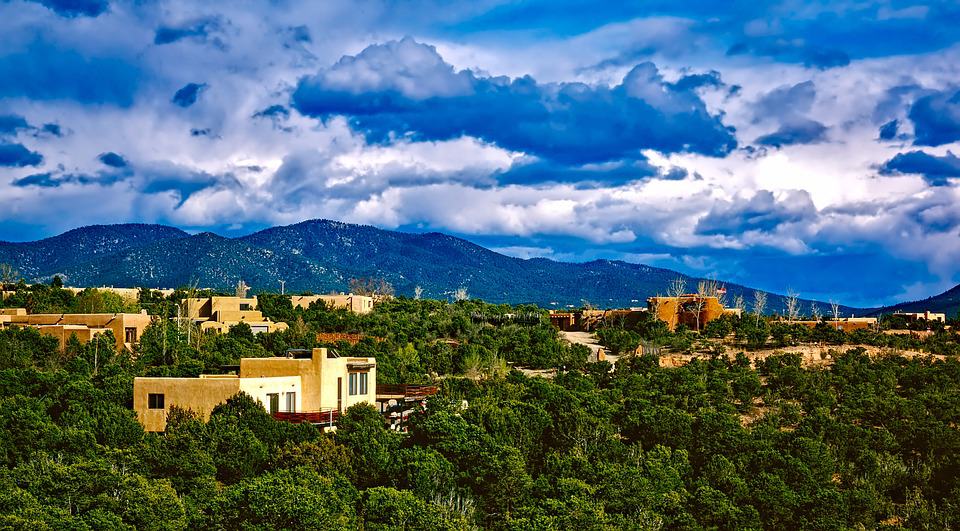
Santa Fe is the capital of New Mexico, but it’s only the fourth-largest city in the state, both by area and population. However, Santa Fe is a record-breaker in many other ways. It sits at an elevation of 7,199 feet, which makes it the highest capital city in the United States.
Santa Fe is also the oldest capital city in the US, with an even older and deeper Native American tradition. New Mexico’s capital is also home to diverse landscapes, an extensive art culture, and a world-class opera. Santa Fe is a major center for art and culture in the US, and it’s actually one of the most prolific art-makers in the country.
The Santa Fe Trail
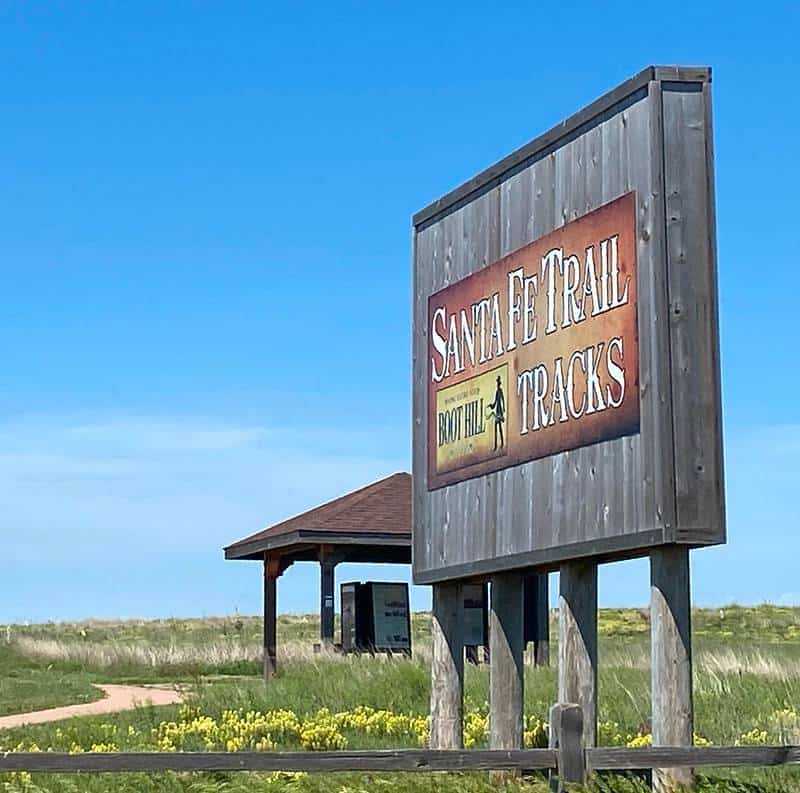
The Santa Fe Trail was a 19th-century transportation route between Franklin, Missouri, and Santa Fe, New Mexico. It was the central commercial highway until 1880 when the first railroad in Santa Fe was constructed.
The trail is historically important for a multitude of reasons – it was used by US military personnel to invade Mexico in the Mexican-American War, and it even contributed to the endangerment of the American bison. There was so much traffic on the trail that bison herds lost access to their grazing lands, which is one of the reasons for the collapse of the species.
Today, the Santa Fe Trail National Scenic Byway closely follows the original route from Northern New Mexico to Colorado.
Albuquerque International Balloon Fiesta
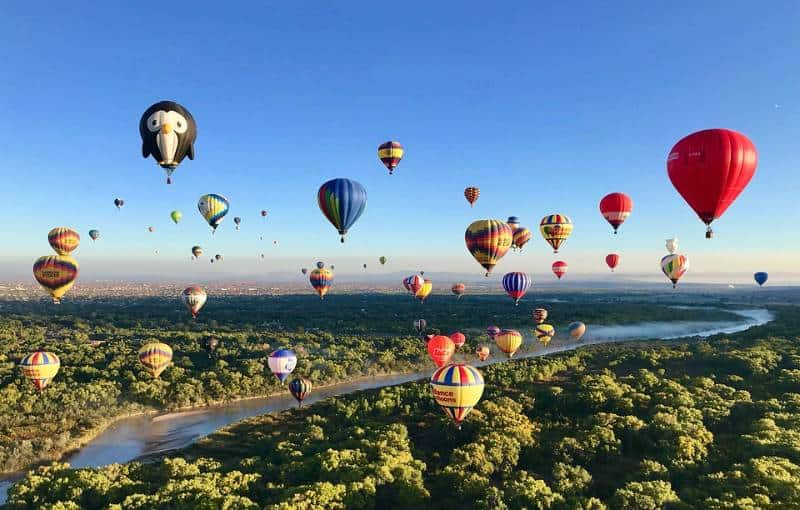
Every year Albuquerque hosts a hot air balloon festival. It’s known as the Albuquerque International Balloon Fiesta, and it is the largest hot air balloon festival in the world!
This event lasts for about nine days, during which period some 500 hot air balloons take to the skies. When this event was held in New Mexico for the first time, there were only 13 balloons, which should give you a good idea of the scale and importance that the Albuquerque International Balloon Fiesta has for this state.
Bandelier National Monument
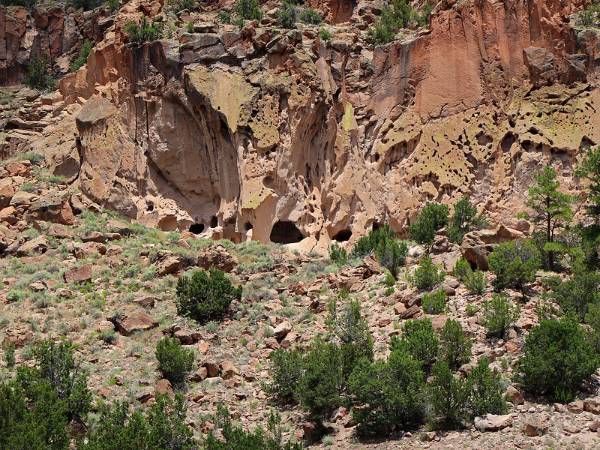
The Bandelier National Monument is a protected area near Los Alamos. The national monument was designated by Woodrow Wilson, to protect and preserve the land of Ancestral Puebloans.
Bandelier spans some 50 square miles, and about 70% of it is just wilderness. The national monument is home to quite a few pueblo structures that are dated between 1150 and 1600 AD, and which are the main attractions of the area.
It’s also worth noting that Bandelier National Monument has been recognized as a National Historic Landmark for its very well preserved architecture.
It’s a Bilingual State
New Mexico is the first state in the US to have bilingual education ordered by law. About 30% of the residents of New Mexico speak Spanish, and several high schools in the state have bilingual programs that help their students become fluent in more than one language by graduation.
It’s worth noting that New Mexico doesn’t have an official language. The state’s constitution never proclaimed an official language, but the most-spoken ones are English, Spanish, Navajo, Keres, and Zuni.
Chaco Culture National Historical Park
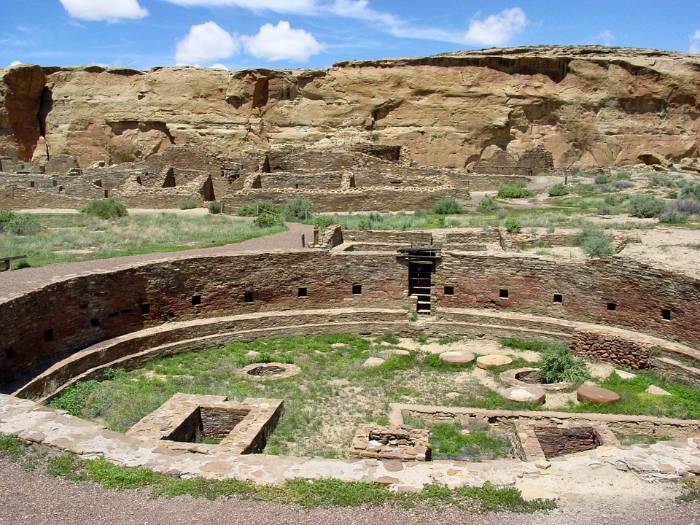
Chaco Culture National Historical Park is situated in northwestern New Mexico, between the cities of Albuquerque and Farmington. The NP is dominated by the Chaco Canyon, which is surrounded by three massive mountain ranges – the Chuska Mountains on the west, the San Juan Mountains on the north, and the San Pedro Mountains on the east.
This historical NP is popularly called the center of an Ancient World, thanks to the variety of Ancestral Puebloan buildings that are preserved within the NP. Chaco Canyon used to be a major cultural center for Ancient Puebloans, and today, most of the sites that are considered sacred to the ancient people are recognized as UNESCO World Heritage Sites.
Petroglyph National Monument
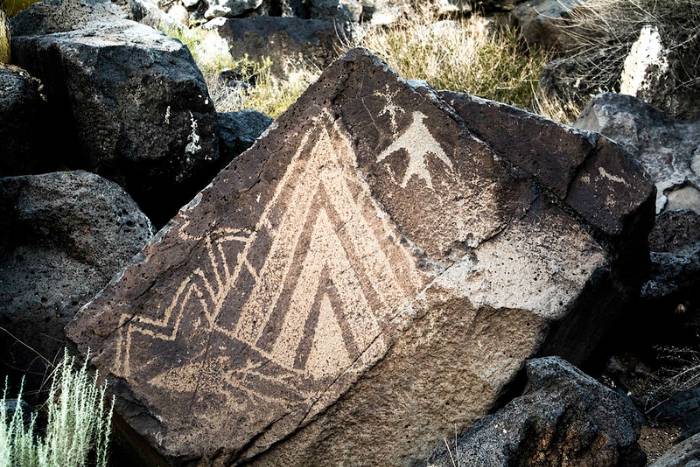
Petroglyph National Monument is an area in New Mexico that protects one of North America’s largest petroglyph sites. The national monument features several popular sites with volcanic rock carvings that are hundreds of years old.
Each of the sites that are accessible by a hiking trail is an opportunity to see hundreds of petroglyphs that were carved into the rocks by early Spanish settlers and Native Americans. It’s estimated that the petroglyphs are between 400 and 700 years old, making this one of the most historically important sites in New Mexico.
Taos Ski Valley
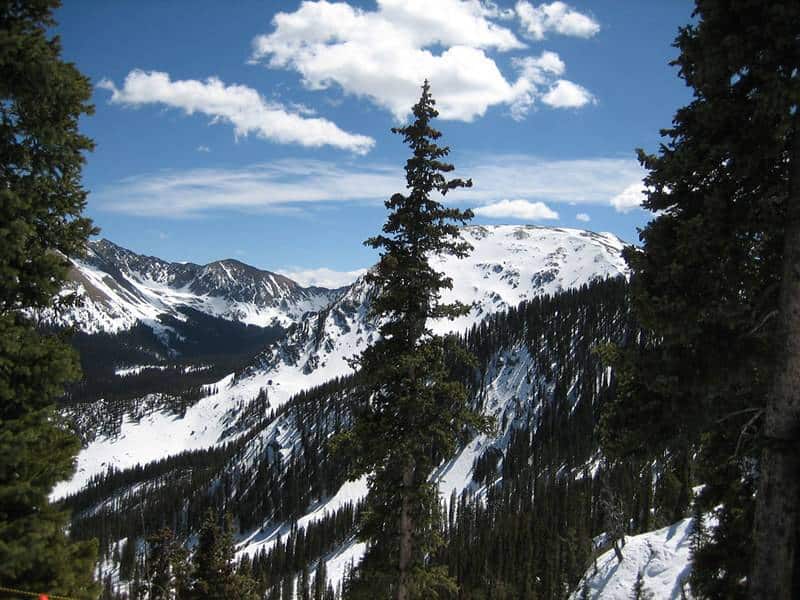
New Mexico is often associated with an arid desert climate and extreme heat, but that’s only true for about half the state. The northern part of New Mexico is quite mountainous with an Alpine climate, best known for the Sangre de Cristo Mountains and very cold winters. Taos Mountains are part of the Sangre de Cristo Mountains, and they’re home to some of the best ski resorts in the state.
Taos Ski Valley is one such ski resort. This alpine village is home to some of the best skiing you can do in the United States, with the Kachina lift that takes skiers to a mountain peak that sits at 12,481 feet above sea level. It’s worth noting that there are a few other great ski resorts in this part of New Mexico as well – Angel Fire is a ski village just a few miles east of Taos.
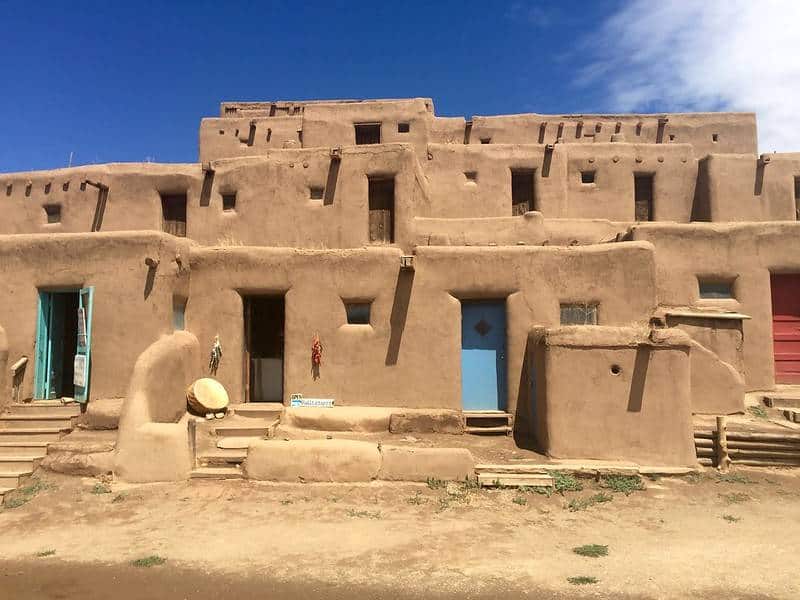
Also, the Taos resort village is just a few miles north of Taos Pueblo, one of New Mexico’s Eight Northern Pueblos. Taos Pueblo is an ancient pueblo about a mile from today’s modern city of Taos. The pueblo is recognized as a UNESCO World Heritage Site, and it belongs to a Native American tribe of Pueblan people.
Gila Cliff Dwellings
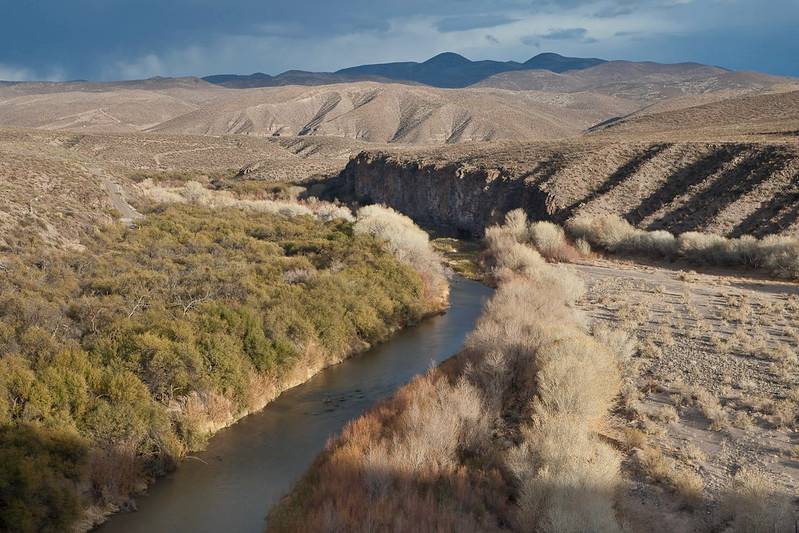
Gila Cliff Dwellings is a national monument in southwest New Mexico, created to preserve and protect Mongollon cliff dwellings near the Gila River. The national monument is famous for being home to the Gila Wilderness, which was the first designated wilderness area in the world. The wilderness is part of Gila National Forest, and the closest city to it is New Mexico’s Silver City.
The Gila Wilderness area is one of the reasons why New Mexico is popularly known as the Land of Enchantment. Such stunning landscapes are abundant in the state, but few of them can compete with the beauty of untouched nature in Gila National Forest.
New Mexico State University
New Mexico State University is the state’s oldest public institution of higher education. It was founded in the late 19th century, and it’s one of the two flagship universities in New Mexico.
The main campus of the school is in Las Cruces, and it’s home to several research facilities. The most notable of them all is the Chile Pepper Institute, which is devoted to researching and educating the world on chile peppers.
They’re the official vegetable of the New Mexico state, so it makes sense that there’s an entire institute dedicated to the chile pepper. In any case, New Mexico State University isn’t exclusively about the promotion of the vegetable. It’s divided into quite a few colleges and schools, including business, education, engineering colleges, and others.
The Rio Grande
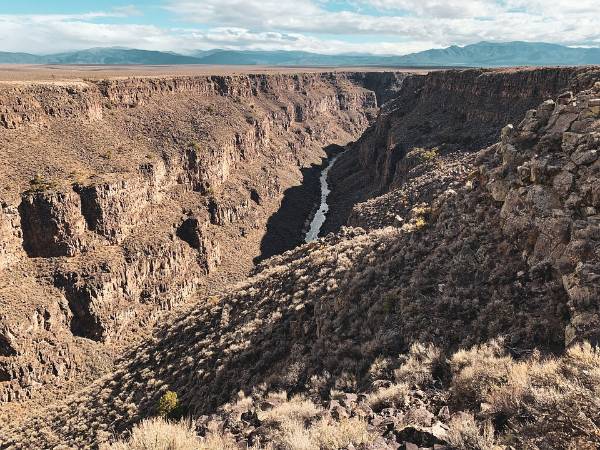
The Rio Grande is a principal river in Mexico and the southwestern United States. The river originates in Colorado and flows to the Gulf of Mexico, with a total length of 1,896 miles. It even serves as a border between the US and Mexico, as well as a partial state boundary between Texas and New Mexico.
North America’s fifth-longest river passes through deserts and it’s essential for the irrigation system of farmland in New Mexico. The Rio Grande also flows through the Rocky Mountains, and at certain points, the stream flows at an altitude of more than 12,000 ft above sea level.
Wheeler Peak Wilderness
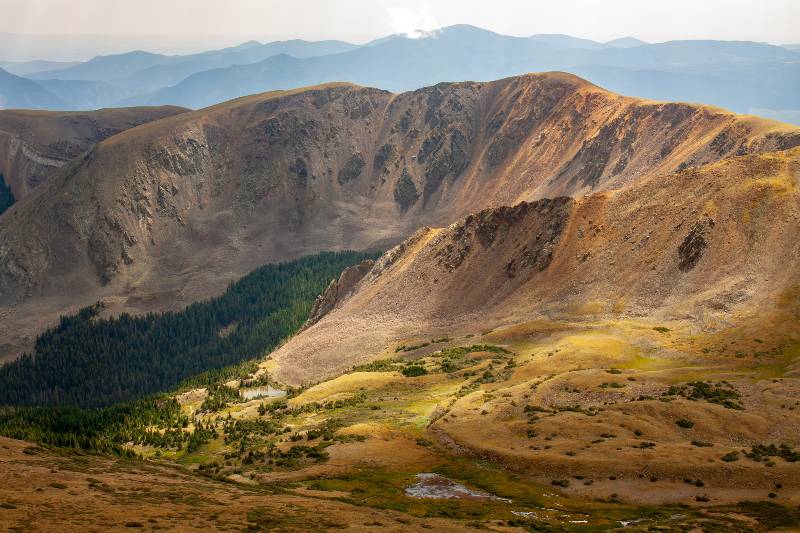
Wheeler Peak Wilderness is situated in Taos County, and it is home to New Mexico’s tallest peak. At 13,161 feet, Wheeler Peak is the highest point in this state and it’s possible to climb it!
The ascent to Wheeler Peak might just be the best hike in entire New Mexico. It’s an exhausting two-day hike that features mesmerizing views of the state’s tallest mountains and the Rio Grande gorge.
The scenic wilderness area near Taos Pueblo is also home to diverse flora and fauna. Visitors can see bighorn sheep, rare bird species, marmots, and many other animals that are native to this area of New Mexico.
Cumbres-Toltec Scenic Railway
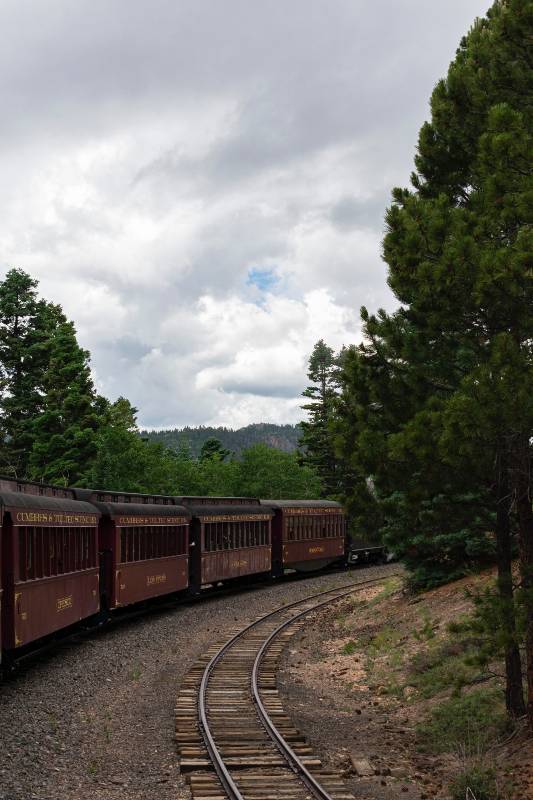
The Cumbres-Toltec Scenic Railway is a narrow-gauge railroad that runs between Colorado and New Mexico. The railway passes through mountain canyons, meadows, and high desert, offering spectacular scenic views of the diverse landscapes throughout (Colorado and) New Mexico.
The trains run daily between May and October, and passengers can choose between a few different excursion options. Passengers are transported back to their car by bus after the ride ends, and it’s even possible to go on shorter rides to Osier Station, which is the halfway point between Antonito and Chama.
Either option is great if you want to admire spectacular scenic views and see exactly why New Mexico is often called the Land of Enchantment!
The Roswell Incident
The Roswell Incident is an event from 1947, which saw the US Army Air Forces recover balloon debris from a ranch near Corona in New Mexico. However, US Army officials initially stated that they recovered a flying disk, which gave birth to countless conspiracy theories.
The Roswell Incident remains one of the most famous UFO incidents in the history of the world. Although it’s been debunked several times, numerous conspiracy theories still persist. That’s pretty beneficial to the city of Roswell, which has managed to capitalize on the entire event by promoting all sorts of UFO-related tours and city attractions!
White Sands National Monument
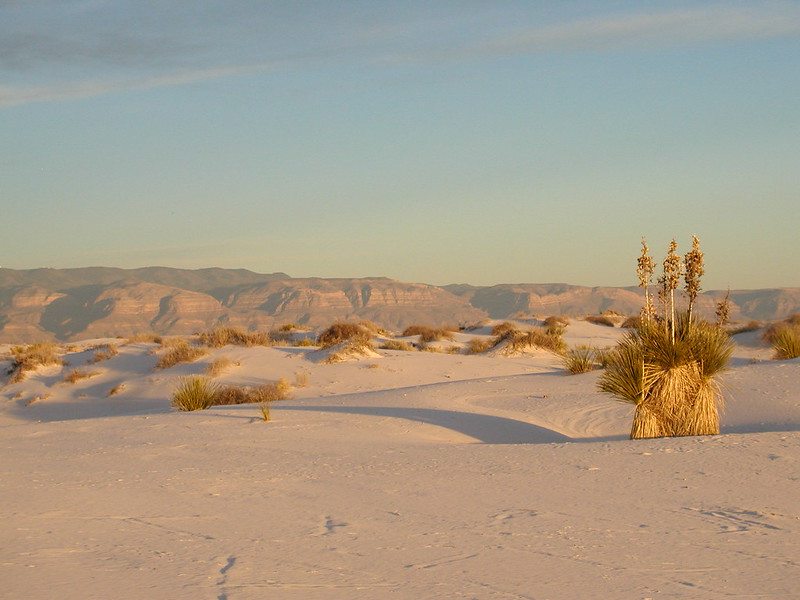
White Sands National Monument is a US national park within the White Sands Missile Range. It’s best-known for its gorgeous sand dunes, thousands of animals, and some of the prettiest scenery in all of the United States.
White Sands National Park is the most visited NP in the state of New Mexico, with more than half a million visitors annually. Most people visit the NP to see the spectacular sand dunes, which are just a short drive away from the park’s visitor center. This national park is also popular for backcountry camping and hiking, and it’s probably the best national monument in New Mexico.
Additionally, White Sands in New Mexico is also home to the earliest evidence of human habitation anywhere in the Americas. Scientists discovered human footprints that are more than 20,000 years old, and you can see them for yourself if you head to the Tularosa Basin.
The First Atomic Bomb
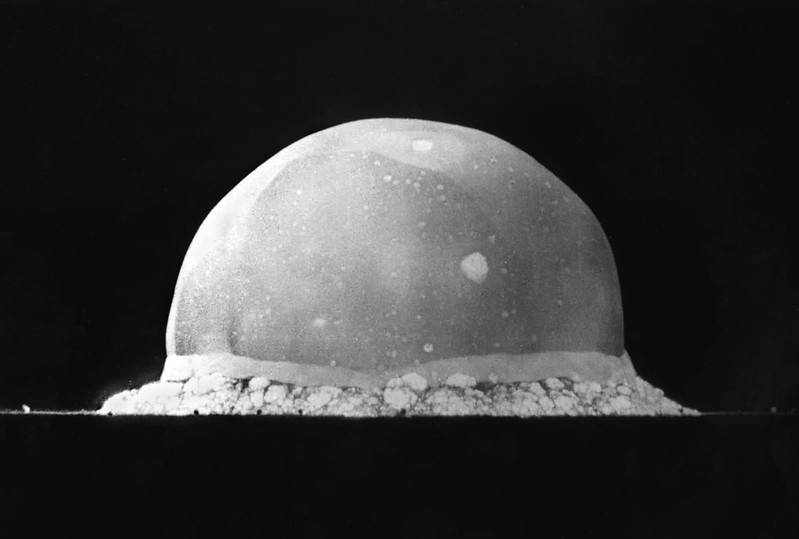
The Manhattan Project led by Rober Oppenheimer during World War II had several key phases, one of which took place in New Mexico. It was the test phase named “Trinity” when the first atomic bomb in the world was detonated in a New Mexico desert. Oppenheimer worked at Los Alamos National Laboratory at the time, and he’s widely recognized as the father of the atomic bomb.
The Trinity site where the nuclear weapon was first detonated is now part of the White Sands Missile Range army base and museum. An obelisk stands tall at the ground zero marker, and even today, decades after the first detonation, the land surrounding the obelisk is slightly depressed.
Carlsbad Caverns National Park
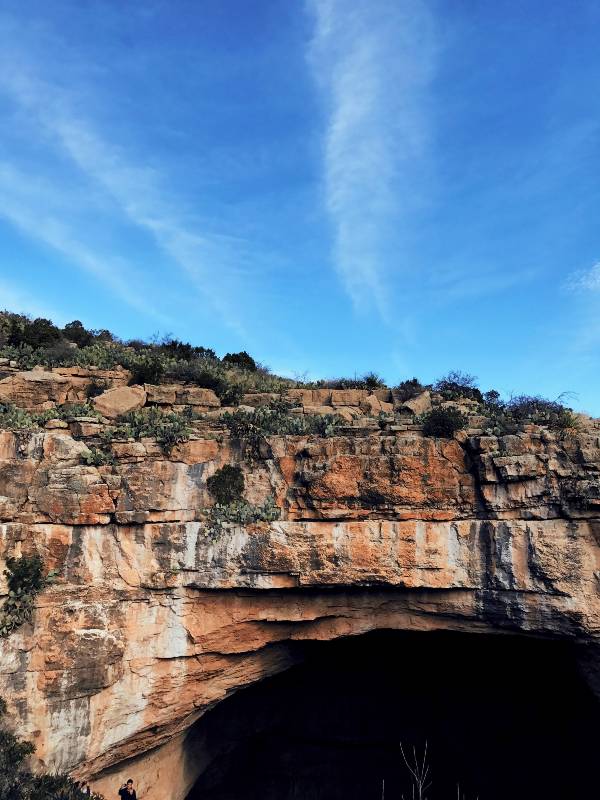
Carlsbad Caverns National Park is situated in the Chihuahuan Desert of New Mexico. It is famous for having about 100 caves, but also for some other fascinating attractions. The main attraction of the NP is the namesake Carlsbad Cavern, which features several spectacular chambers, one of which even has an underground cafeteria and tunnels.
It’s possible to hike to Carlsbad Caverns on your own, or you can go on a short elevator ride from the visitor center. The national park is also popular for hiking, camping, and other historical sites. It also includes the Rattlesnake Spring Historic District, which is an area surrounding an oasis in the Chihuahuan Desert.
About the Author Anna Timbrook
Anna is the co-owner of expert world travel and can't wait to share her travel experience with the world. With over 54 countries under her belt she has a lot to write about! Including those insane encounters with black bears in Canada.

