
Last Updated: October 3, 2021
Best (Buddhist) Temples In Sri Lanka
Sri Lanka is an island country in the Indian Ocean, and home to numerous Buddhist and Hindu temples. This guide focuses on the best Buddhist temples in Sri Lanka, featuring the oldest, largest, and most important temples and stupas that can be found in this beautiful country!
Each of the temples mentioned here is special in its own way, and ideally, you should visit them all. The good news is that the majority of the Buddhist temples in Sri Lanka are located in the Sacred City of Anuradhapura, so even though it sounds challenging, it certainly won’t be an impossible feat!
Read on to learn more about the best temples in Sri Lanka, and see which ones are the most interesting for you.
Table Of Contents
Show All
Temple of the Sacred Tooth Relic (Kandy)
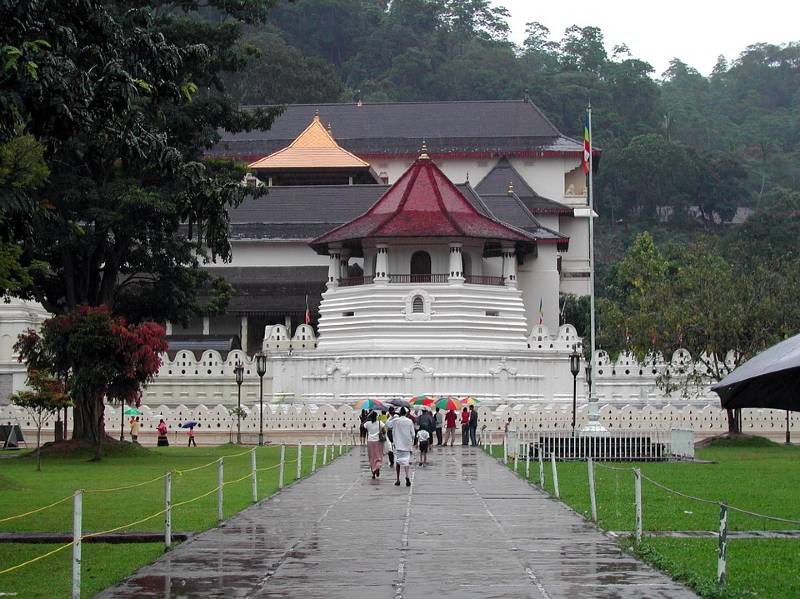
Temple of the Sacred Tooth Relic is one of the most famous Buddhist temples in Sri Lanka. It is located in Kandy, and it is home to the relic of the tooth of Buddha. The relic is of immense importance to the local politics in Sri Lanka because it is believed that whoever has the relic also maintains the governance of the country. Throughout history, this relic was traditionally in possession of Sinhalese kings.
This Buddhist temple is a UNESCO World Heritage Site, both because of the relic and the overall significance of the temple. It’s one of the most visited temples in all of Sri Lanka – devotees travel from all over the planet to worship the sacred relic. The temple is also home to two museums, which are an amazing opportunity to learn more about Buddhism and the philosophy behind it.
Dambulla Cave Temple (Dambulla)
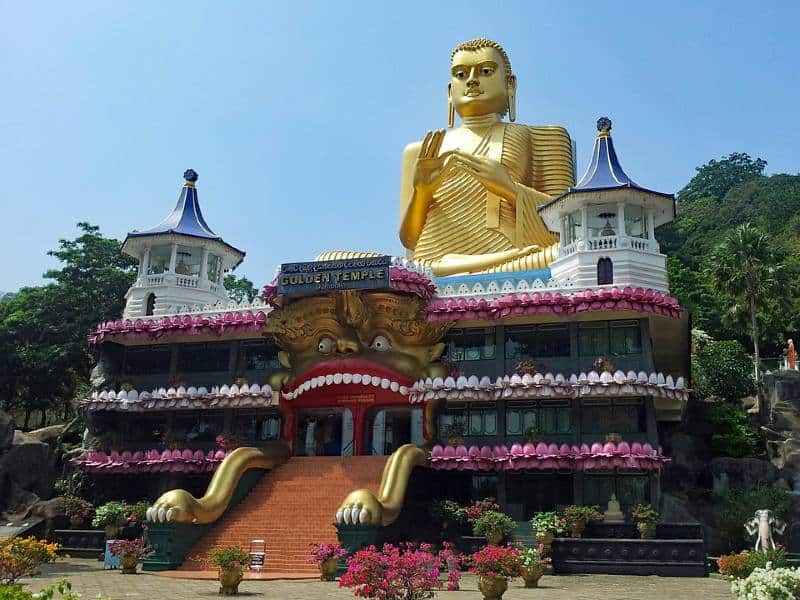
Dambulla Cave Temple is a complex of Buddhist temples that are built into caves. It is the largest and best-preserved cave temple complex in the country, and it’s a fascinating sight that attracts visitors from every corner of the planet. The cave temples are built into an overhanging rock that towers 160 meters over the surroundings, and more than 80 caves are documented in this area.
The main tourist attractions are spread across five caves, and they include various statues and paintings that are about Gautama Buddha and his life. The temple complex boasts 153 statues of Buddha, as well as four statues of deities, and three statues of kings of Sri Lanka. You can also see some spectacular murals in the caves that cover an area of more than 23,000 square feet.
Ruwanweli Maha Seya (Anuradhapura)
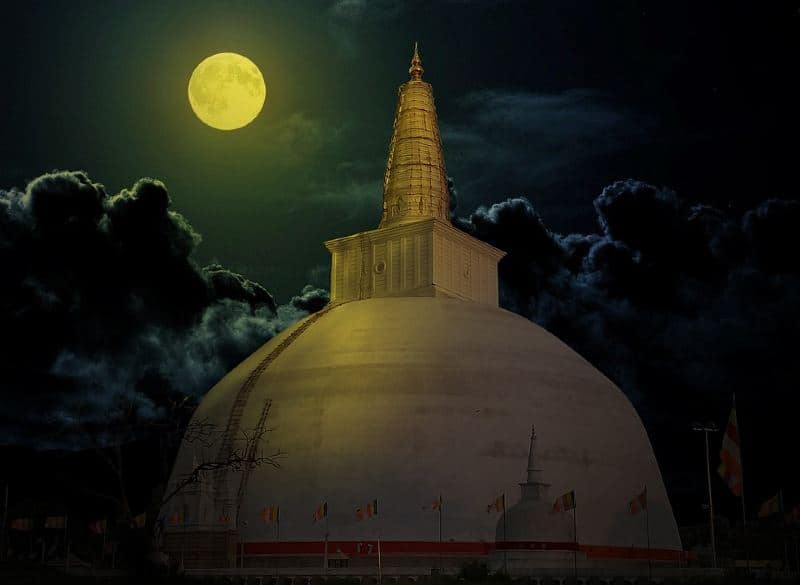
Ruwanweli Maha Seya is an ancient Buddhist stupa dating from 140 BCE. It’s one of the tallest ancient monuments in the world, with a total height of 103 meters. But that wasn’t always the case; the initial stupa built by Sinhalese King Dutugemunu was just some 55 meters tall, and it was gradually raised and renovated by later kings.
This stupa also served as the model for the Kaunghmudaw Pagoda in Burma, which is regarded as one of the best temples in Myanmar.
This stupa is one of the most sacred sites in Sri Lanka because it contains relics associated with Gautama Buddha. In fact, the stupa holds the largest collection of his relics anywhere, which is why the temple is of such huge importance to Buddhists from all over the world. Also, this temple is situated in a serene and scenic location, and being there just feels very peaceful and spiritual.
Muthiyangana Raja Maha Vihara (Badulla)
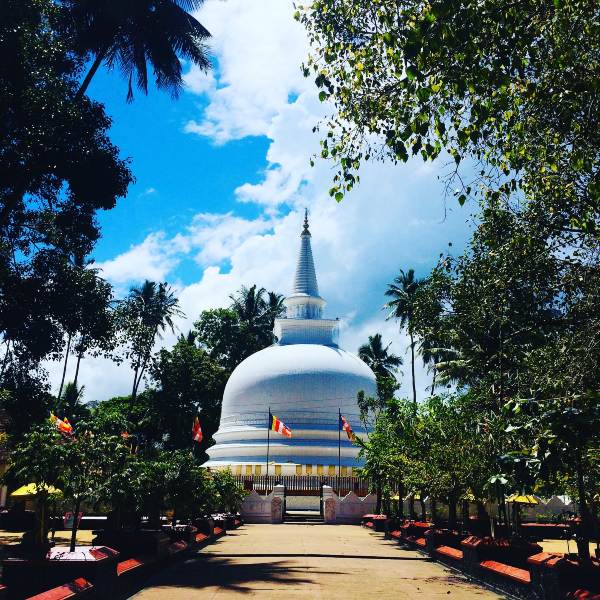
Muthiyangana Raja Maha Vihara is a Buddhist temple in Badulla town. It is believed that the temple was visited by Gautama Buddha, which is why it is considered one of the Solosmasthana – the 16 most sacred places in Sri Lanka, which are believed to have been hallowed by Gautama Buddha’s visits.
There are several attractions at this temple, but the thorana – freestanding decorative piece of architecture – is the most notable one. It is famous for having six levels and it features a dragon on the second level. The temple also features two image houses, another thorana at the entrance to the primary image house, a stupa, and four Bodhi trees.
The stupa is a little under 20 meters tall – although it’s not the most impressive stupa in Sri Lanka, its beauty and importance are undeniable.
Jaya Sri Maha Bodhi (Anuradhapura)
Jaya Sri Maha Bodhi is perhaps the most unique Buddhist temple in all of Sri Lanka. It’s a sacred bo tree and it is believed that it was under this tree that Buddha attained Enlightenment. Gautama Buddha sat under a tree in Bodhgaya, India, and a branch from that tree was brought to Sri Lanka and planted in the Royal Park in Anuradhapura.
The tree was planted in 288 BC, and to this day it remains the oldest living tree with known planting date, and which was planted by a human.
This tree is one of the most important and most sacred Buddhist relics in the world, and it is respected and worshipped by Buddhists everywhere. It is of such huge importance that all construction that could harm it is banned within a 500-meter radius. Also, other fig trees have been planted in the area, for the purpose of protecting the sacred tree from storms and animals.
Thuparama Seya (Anuradhapura)
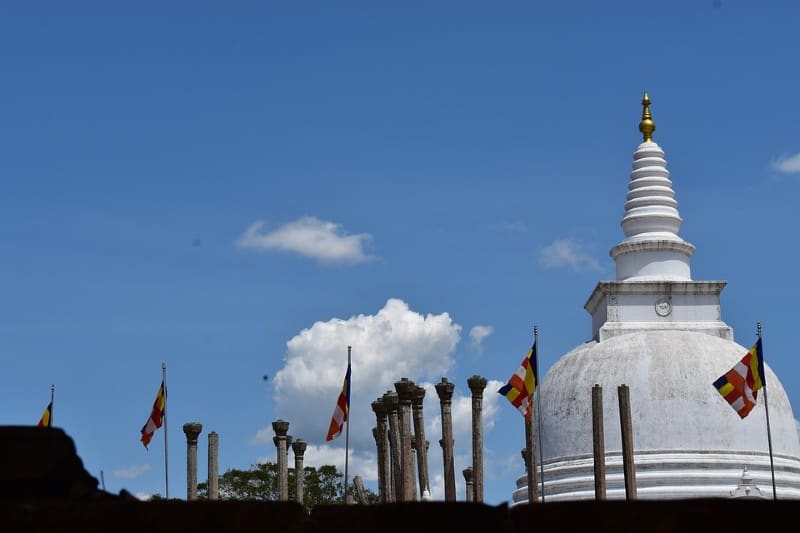
Thuparama Seya is the oldest and first-ever Buddhist temple that was constructed in Sri Lanka in the third century BC. It’s situated in Mahamewna park in Anuradhapura, and it was built during King Devanampiya Tissa’s reign. This is one of the country’s smaller temples, but the historic importance is undeniable, so it certainly deserves to be recognized as one of the best temples in Sri Lanka.
It’s also an archaeological site, and it was formally recognized as such by the Sri Lanka Government.
The stupa is surrounded by stone pillars, which suggest that there was once a Vatadage here with a conical roof. However, it’s important to note that this temple was once destroyed entirely, and the structure that is present today is actually from 1842. Several renovations were carried out throughout the centuries and the current structure stands at 3.45 meters tall and 50.1 meters wide.
Isurumuniya Rajamaha Viharaya (Anuradhapura)
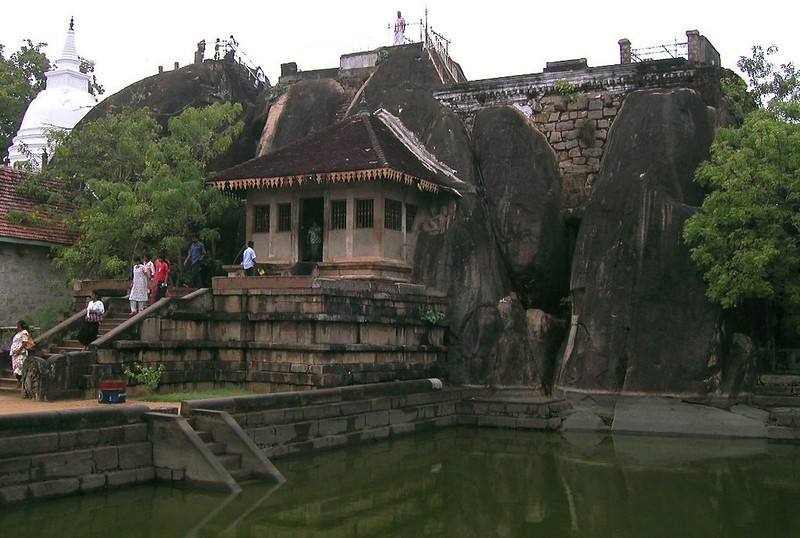
Isurumuniya Rajamaha Viharaya is a Buddhist temple near the Tissa Weva reservoir in Anuradhapura. The waterfront temple is best known for its stone carvings, the most famous of which is the carving of Isurumuniya Lovers. The other stone carvings are the Royal Family, Horseman, and Elephant Pond, and you should check them all out if you decide to visit this Buddhist temple in Sri Lanka.
The Isurumuniya temple was built during the reign of King Devanampiya Tissa, as a residence for newly ordained monks. It is connected to the cliff with a cave above it, plus it’s believed that both the temple and the reservoir were built around the same time.
Abhayagiri Stupa (Anuradhapura)
Abhayagiri Stupa is a Buddhist temple located in Abhayagiri Vihāra, a former monastery site in Anuradhapura. It’s one of the most extensive ruins in the world, as well as the second-largest stupa in all of Sri Lanka. Originally built in the 2nd century BC by King Vattagamini, the stupa used to hold the Tooth Relic, and to this day it remains one of the most important pilgrimage sites in the country.
The stupa is the focal point of this vast historic complex, but it’s certainly not the only interesting sight in the area. It’s worth noting that this particular Buddhist temple is not extremely popular with tourists, so there shouldn’t be huge crowds. It’s best to visit the stupa early in the morning or late in the afternoon – the heat during the day is often unbearable, and it could spoil the experience.
Mirisaweti Stupa (Anuradhapura)
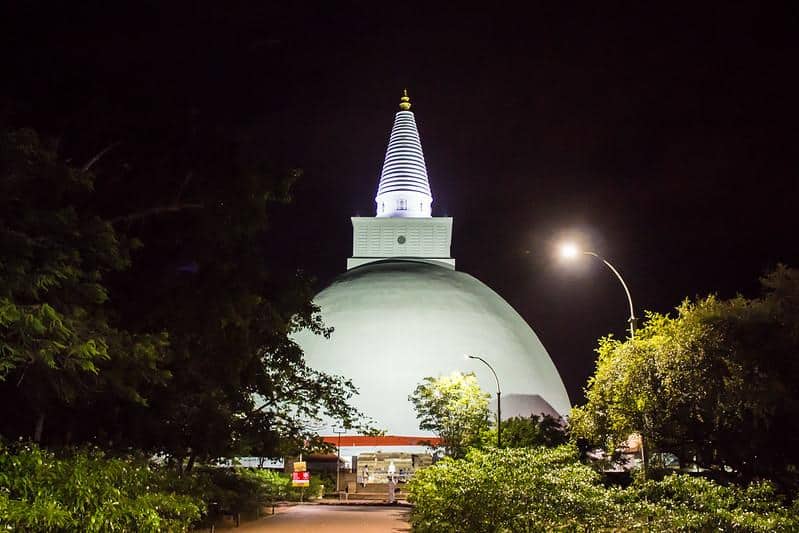
Mirisaweti Stupa is another temple located in Anuradhapura, and it boasts a very interesting history. It was built by King Dutugemunu after he successfully defeated the invading South Indian King Elara. Legend has it that King Dutugemunu left his scepter in the place where the stupa is now, and went to Tissa Wewa for a bath.
When he returned, he discovered that the scepter could no longer be moved, so he ordered the stupa to be built around it.
There’s another legend that says that the King once forgot to offer his meal of chilly to the monks in the area, which was standard practice during that time. He named the stupa Mirisawetiya as an apology to them – “Miris” is the Sinhala word for chilly.
Rankoth Viharaya (Panadura)
Rankoth Viharaya is one of the most important temples in Panadura, and a must if you happen to travel to that region. It was built on top of a rock in the center of Panadura town, which makes it one of the most unique temples in Sri Lanka. The Buddhist temple boasts gorgeous paintings and a stunning shrine room, and it takes about an hour or two to really see the place.
This temple boasts a rich and interesting history. It was originally founded in 1810, in a small hut in the Panadura quarry. It was originally known as Galwale Pansala, which means “the temple in the quarry”. Later it was renamed Galkande Vihara, and when the pinnace of the stupa was gilded in 1890, it became known as Rankoth Vihara.
About the Author Anna Timbrook
Anna is the co-owner of expert world travel and can't wait to share her travel experience with the world. With over 54 countries under her belt she has a lot to write about! Including those insane encounters with black bears in Canada.

