
Last Updated: April 24, 2021
Best Snorkeling Spots in Costa Rica
The coastal waters of Costa Rica are rich in nutrients and minerals. The thriving underwater world in this country makes it a prime spot for snorkeling and diving.
Visibility is incredibly clear. Marine life is sure to be diverse and abundant. Costa Rica has coastlines in both the Carribean Sea and the Pacific Ocean. While this may be great for eco-tourism, water conditions may not always be ideal for some leisurely snorkeling. Diving would be your best bet, but if that’s not your cup of tea, here are some of the best and safest snorkeling locations in Costa Rica.
Table Of Contents
Show All
Gandoca Manzanillo Wildlife Refuge

Gandoca-Manzanillo Refuge is located in Costa Rica’s southeastern Talmanca region. Its 23,348 acres of land has a a collection of rainforest and wetland habitat. It is also one of the two places in the country with a thriving coral reef. Many consider this park to be one of the best spots for diving and snorkeling in the Caribbean Coast. Aside from the reef, there are little bays, inlets, and islands that attract a diverse ecosystem and marine life. Sea turtles nesting in the park from March to July. There have also been regular sightings of manatees, crocodiles, and dolphins.
Cahuita National Park

Photo credit: Bigeyesworld.com via Foter.com / CC BY-NC-SA
Aside from Gandoca, Cahuita National Park is the other place in Costa Rica with a natural living coral reef with over 35 species of coral. It’s found on the Southern Caribbean Coast. Punta Cahuita is one of the best snorkeling spots in the park and is found at the end of the 5.6-mile trail along the shoreline. There are unpredictable rains in this side of the country, but you can time you visit during the colorful reggae-style festival of Carnival in September and October.
Tortuga Island
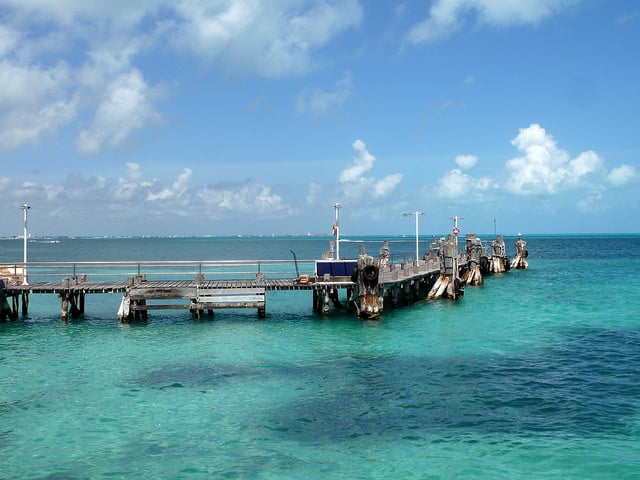
Photo credit: Fraser Mummery via Foter.com / CC BY
The island is popular with many tourists because of its white sand and clear waters. There are tour options that provide meals, which is something you should get if you’re to visit Tortuga Island. It’s isolated, undeveloped, and very pristine. The trip to the island can take an hour and will sometimes be rough depending on the season. You can hike around the island, but most visitors go for some snorkeling just off the coast of the island. Jagged volcanic rock spills into the ocean creating a dramatic contrast against the brown sand, red rocks, and crushed shells.
Playa Hermosa

Playa Hermosa is popular with many expats being 20 minutes away from the Daniel Oduber International Airport. While there is an actual residential community living by the beach, there are still several hotels that offer comfortable accommodations. The gentle waters make it very family friendly for some fun in the water with the kids and a very relaxing snorkeling experience. The best snorkeling spots, however, are a little off the beach and towards the cliff where a small white sand bay hides between the rocks. Underwater will be rocky reefs covered in seaweed surrounding and a large number of blennies and Cortez rainbow wrasses.
La Penca

Photo credit: Alba Sud Fotografia via Foter.com / CC BY-NC-ND
La Penca is a small beach on the peninsula separating Playa del Coco and Playa Hermosa on Costa Rica’s Pacific coast. The entry into the water gives you 20 meters of rocky seabed before hitting the sandy area. Large groups of wrasse and damselfish rest near the rocks, where small moray eels sometimes nestle underneath. The left side of the area, towards the cliff, gives more interesting sights. It can be a little bit challenging, but there are many species taking shelter within the rocks. You’ll find butterflyfish, and different species of angelfish. Because of its topography, however, the waters can be quite rough and will be slamming against the rocks. You’ll have to be careful and postpone your snorkeling when you see some waves.
San Juanillo

Photo credit: Organization for Tropical Studies via Foter.com / CC BY-NC-SA
San Juanillo sits on the Northern Pacific of Costa Rica. There is a regional airport located in Nosara which can be accessed from the nation’s capitol of San Jose. Tours are available locally to bring visitors to the Ostional Turtle Refuge, a short distance to see nesting turtles, hatchlings, and incubated eggs. Its pristine white sand beaches are also popular locations for snorkeling. There is a small reef to see hundreds of different fish, eels, and sea urchings. There are some turtle sightings as well since the turtle refuge is not far away.
Tamarindo

Photo credit: Mark Fischer via Foter.com / CC BY-SA
Tamarindo is a town in the Guanacaste Province, on Costa Rica’s Pacific coast. It’s more popularly known for its strong surf, but there are several snorkeling sights as well. To the north, Playa Grande Beach is a major nesting site for huge leatherback turtles and forms part of Las Baulas National Marine Park. A boat ride away from the town is Catalina Islands. There are several tour operators that bring visitors to this group of different volcanic rock formations that rise to the surface in front of Flamingo Bay. While common reef fish are abundant, there have also been sightings of bigger species like white tip reef sharks, giant mantas, eagle rays, devil rays, moray eels, octopus, angelfish, and turtles.
Costa Rica is an adventurer’s dream. Incredible food and lively culture draw visitors from all over the world to this small coastal country. But wildlife, marine life, and endless adventures out in the sun are what make visitors stay and fall in love with Costa Rica.
About the Author Roger Timbrook
Roger is a little obsessed with travel. He has been to over 40 countries, broken 3 suitcases and owned over 10 backpacks in 12 months. What he doesn't know about travel, ain't worth knowing!

