
Last Updated: September 14, 2021
Best Waterfalls In El Salvador
El Salvador is nestled between Nicaragua and Guatemala on the Pacific coast of Central America. Like a lot of the Central American countries that surround it, El Salvador is home to stunning beaches, tall mountains, dense rainforests, rivers, and of course, some stunning waterfalls.
There are a lot of waterfalls in El Salvador and no one has the time to see them all in one visit so we are going to focus on just the best waterfalls in El Salvador that are worth seeing.
Most of them are found in the highlands around the capital San Salvador but you can also find a few near the Pacific coast too.
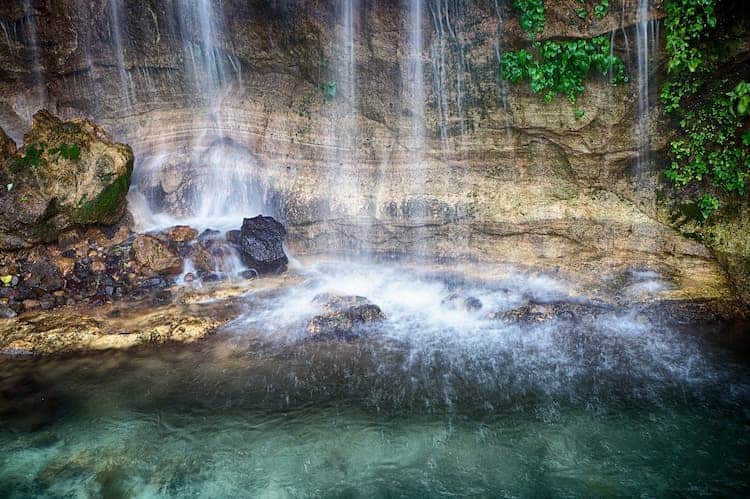
Table Of Contents
Show All
Cascada El Escuco
Northwest of the capital San Salvador is the stunning national park of Parque Aquatico El Escuco which is home to the Cascada El Escuco waterfall. It’s quite a drive from San Salvador but if you’re heading that way or staying on the northern Pacific coast of El Salvador it’s well worth a visit.
When visiting the waterfall it’s best to base yourself at the nearby town of Santa Domingo from which you can access the park via taxi or bus in a short drive.
Once you’re in the park it’s a short hike to the waterfall and the trail leading the way is beautiful. It’s covered in stunning flora and fauna for the area, and it follows the small river/stream that flows down from the waterfall itself. The path can be wet and slippery so be sure to take your time and wear the appropriate footwear.
The waterfall is stunning and is around 30 feet tall. You can swim in the pools beneath it and if you go on a weekend you can actually repel down the waterfall from top to bottom with the assistance of a trained guide.
After you have seen the waterfall, it’s nice to take a hike on the trails through the forest where you’ll see monkeys, beautiful birds, and stunning butterflies.
Chorros de la Calera
The Chorros de la Calera waterfall is near the charming town of Juayua which is in a protected national park north of San Salvador. The area is home to a lot more than just waterfalls. You’ll find stunning rainforests full of ancients trees, monkeys, birds, butterflies, and other endemic species too. It truly is a hikers paradise.
Getting to the waterfall from Juayua is very easy as there is no need for public transport, you can simply walk out of your hotel or hostel and make your way down to the hiking trail. The hike to the waterfall is all downhill and the path is quite well maintained with steps and sometimes a handrail. It can be washed out though if there has been heavy rainfall so don’t forget to wear some serious shoes.
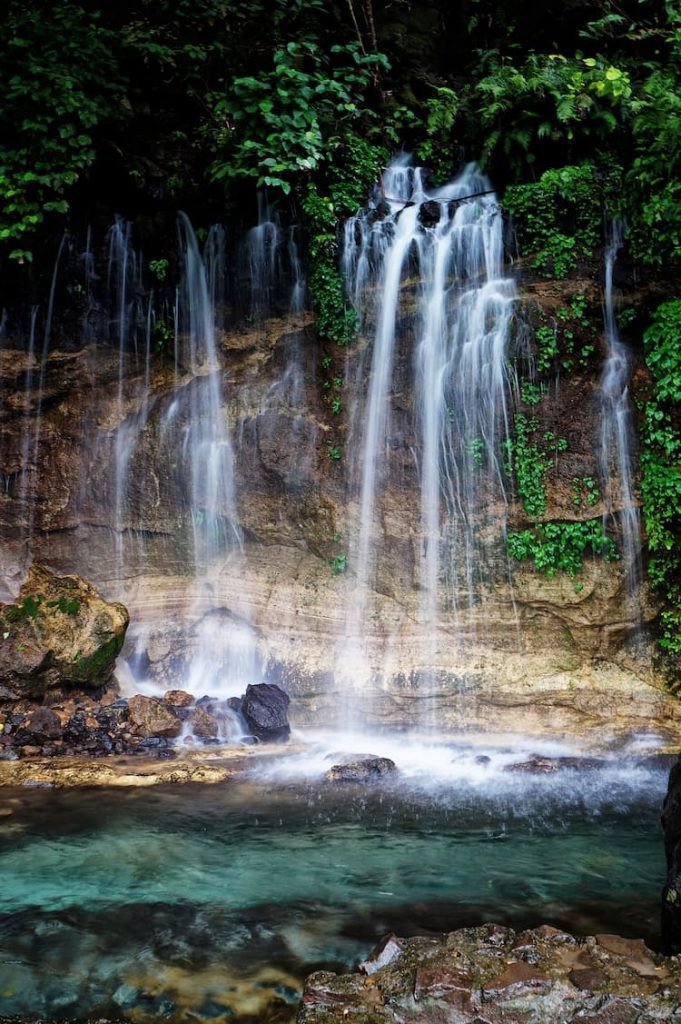
When you arrive at the Chorros de la Calera waterfall you’ll find a wall with multiple different streams pouring down it into a concrete secured pool. The Chorros de la Calera waterfall isn’t too strong at times so you can actually go and stand under it plus you can swim in the pools too. The water is crystal clear and taking a dip is super refreshing and a good idea before the long walk uphill to get back to Juayua.
The area is protected by Police so it is safe to walk to the Chorros de la Calera waterfall but there are reports that the police only work the area on weekends. It’s also advisable not to hike along and to always go with a group.
If you’re a solo traveler you can get a guide to go with you from the park office for free but remember to tip them well and bring some water and snacks for them, as they earn just $10 a day.
Los Tercios Waterfall
If you’re planning on spending some time in the central highlands of El Salvador a few hours north of San Salvador then it’s certainly worth going to the charming town of Suchitoto and visiting the Los Tercios Waterfall.
The town of Suchitoto is surrounded by rainforest and along the banks of the Rio Lempa where it opens up into a kind of lake, plus you also have the Guazapa volcano to the west which is also worth exploring whilst you’re there.
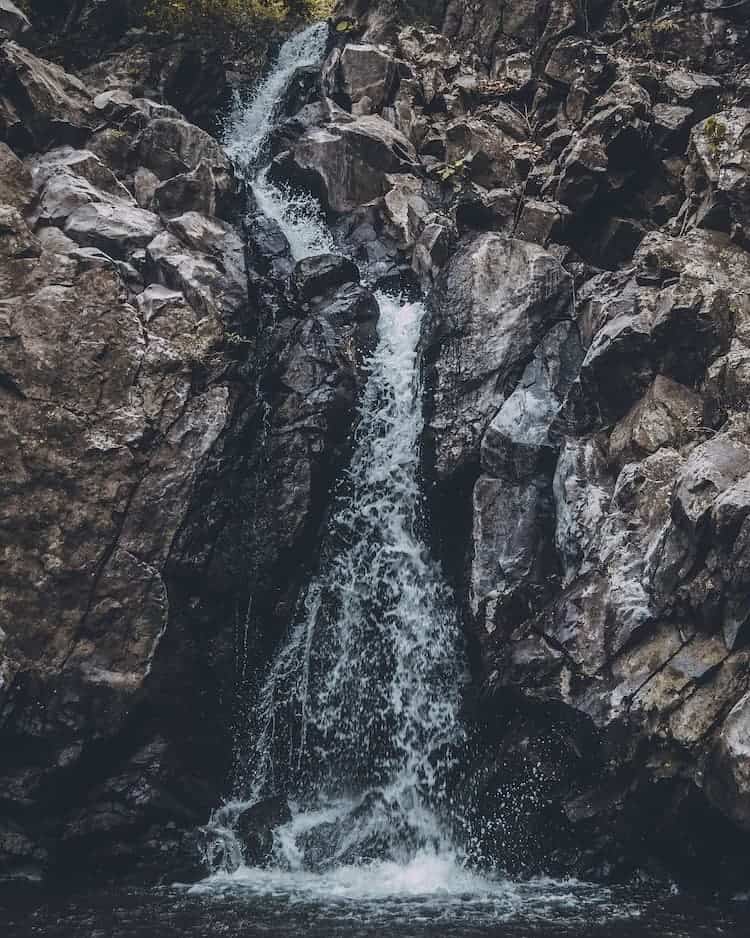
The Los Tercios Waterfall is quite famous and it’s not for the water trickling down it but for the amazing rock formation the water falls over. The face of the waterfall is built up of stone blocks half-covered in green algae and everyone who visits the Los Tercios Waterfall usually talks more about the rocks than the waterfall itself.
Getting to the Los Tercios Waterfall is easy from Suchitoto town. Hop in a taxi or on a bus for a few minutes and then it’s about an hour’s hike down to the waterfall. The trail is obvious but it’s not for young children, older people, or if you’re scared of heights. Good shoes are needed as the path can be scrambly and slippery depending on the conditions.
You can also go with the guide to the waterfall and you can book one from the tourist office in town. It’s free but remember to tip well. Having a guide is awesome as they’ll tell you stories of the old legends of the forest and the waterfall.
Once you’re at the waterfall, it’s hard to be amazed that the rock formations were naturally created, they look like a piece of art. It doesn’t always have water flowing down it, it depends on the season, so if you’re there in the dry season (Nov-April) you might only see the rocks.
Salto De Malacatiupan Waterfall
Close to the town of Atiquizaya in El Salvador is the Salto De Malacatiupan Waterfall(s) that are pretty unique in the world of waterfalls as they are actually thermal, as in made from hot springs, which is pretty amazing.
There are a series of waterfalls at Salto De Malacatiupan that fall into numerous plunge pools in which you can soak up the warm thermal spring waters. You can even find hot thermal pools of water next to cold ones, so you can play the Scandinavian sauna game of going from hot to cold. The water is turquoise blue and some say it has healing effects on the body and mind when you bathe in them.
Getting to the Salto De Malacatiupan waterfalls from the nearby town of Atiquizaya is very easy. You can book a guide to take you there at the local tourism office in Atiquizaya and then it’s just a 20-minute drive down a dirt road to the river bank.
You can bathe in the pools on arrival and then to get to the waterfall it’s a 20-minute walk. At the end of the walk is when you’ll stumble upon a stunning turquoise pool with thermal waters flowing into it from Salto De Malacatiupan.
There aren’t many thermal waterfalls in the world and the Salto De Malacatiupan waterfall has to be the most unique one in all of El Salvador for this reason. Please be aware that you can not visit the waterfall during the wet season as the flow is too strong and it’s too dangerous, so it can only be seen in the dry season.
Tamanique Waterfalls
If you’re planning on driving from San Salvador to the coast then it’s worthwhile stopping over in the town of Tamanique on your way, as it’s halfway between the capital and the beautiful pacific ocean, or you can go on a day trip from the beach to the Tamanique Waterfalls.
Getting to the Tamanique Waterfalls isn’t so easy as it involves quite a long hike of around 4 hours to get to the waterfalls and back, so it is best to hire a guide to show you the way, and since it’s so humid, heading out in the early morn is advisable. Having a guide also means you will learn about the forest on the way and they can show you where to jump into the waterfall safely.
The hike is also quite challenging and steep with a lot of ups and downs on the way. Make sure you bring plenty of water and some good shoes, plus some water and snacks for your guide. When you arrive you’ll see the 9 or so meter waterfall plunging into a deep pool beneath it.
You can swim in the pool, which is highly recommended as a refreshing break for the hike and there are small ledges you can climb up to jump into the waterfalls too. You’ll also find a series of different pools that are worth exploring and swimming in too.
Since the Tamanique Waterfall is harder to get to, chances are you’ll have the place to yourself which is a real treat as you can enjoy it in peace.
The waterfall never dries up but during the dry season it can be a little slow, so don’t be disappointed if it’s not quite as dramatic as you first thought it would be, as it probably is during the wet season.
About the Author Roger Timbrook
Roger is a little obsessed with travel. He has been to over 40 countries, broken 3 suitcases and owned over 10 backpacks in 12 months. What he doesn't know about travel, ain't worth knowing!

