
Last Updated: December 22, 2021
Traditional Food In Chad (Tasty & Healthy)
Chad sit’s in central north Africa and it’s neither a sub-Saharan nor Saharan country, it’s a little bit of both. The north of Chad is part of the Sahara Desert and as you travel south you move into the Sahel, a semi-arid region, and then into the lush fertile south of the African savannah.
This range of climates in Chad evokes a range of different agricultural practices across the country and the traditional Chadian dish differs greatly from the north to the south. It’s also influenced by the Islamic following to the north and the short colonization by the Frech it experienced in the early 1900s.
The Arab people in the north depend on fresh produce of camels and goats for meat and dairy, and they only use grain that can be stored for a while. As you move further south, you start to find a larger variety of cattle and meat along with more fresh mixed vegetables.
Fish is also important in Chad, despite it being a landlocked country. Lake Chad and the large Chari river are teeming with freshwater species like tilapia and Nile perch that are typically consumed. The traditional cuisine in Chad is diverse and here are some of the best dishes, including some of their staple foods.
Table Of Contents
Show All
Kisra

Like most African countries, there is a staple food that is served with almost every meal. In Ethiopia it’s injera, in Kenya, it is sima and in Chad, it’s kisra.
Kisra is quite like injera, if you have tried it, but has a Chadanian spin on it. It’s pretty much a thing flat-bread that looks a bit like a pancake. It’s traditionally made with sorghum flour that is mixed into a batter.
Once a batter, it’s then spread across a hot metal plate using anything available, even a bank card. The metal plate is traditionally greased up with cow brains that are rich in fat but nowadays vegetable oil is commonly used. The bread can be ready within a minute so cooks need to work hard not to burn it.
You’ll come across kisra a lot in Chad and it’s usually served with stew. Look for it on the menu as kisra or kisra rhaheefa. Don’t order kisra aseeda as you’ll end up with a porridge made from the bread instead.
Jarret De Boeuf
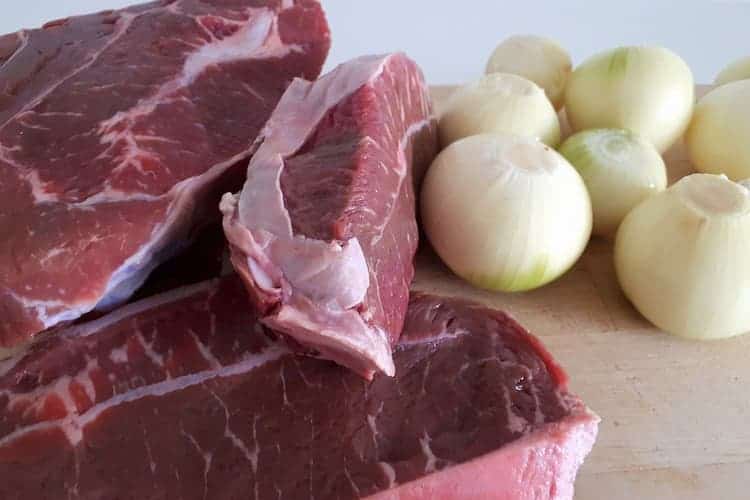
Jarret de boeuf or shin of beef was given a French name during the French colonization and is a delicious traditional Chadian stew made from the shin of beef and vegetables. It’s one of my favorite traditional foods in Chad.
You’ll find this Chadian cuisine in the southern regions of Chad more often as it’s fertile enough to grow the tasty vegetables that are put in the stew. Beef shin is not tender meat and to make it tend, the shin is heated slowly in the stew for 3 hours or more. This also gives time for all the delicious and healthy juices from the bone to enter the stew too. A few hours into the cooking process, the vegetables are added for flavor as part of its cooking traditions.
Jarret de boeuf is usually served with a kind of tomato salsa with onions, coriander, garlic, chopped tomato, and a carb, like rice. When cooked well, it is delicious and it’s a dish eaten to cure the hangover. I’m not sure why, maybe it’s the bone marrow, but it fixes you right up.
Maharagwe
If you’re looking for a super filling, incredibly affordable, and delicious meal that is safe to eat at any restaurant on the side of the road, Maharagwe is the one to for. It’s not just a traditional dish in Chad but reaches all the way to Kenya where it’s also commonly eaten. It’s thought it made its way to Chad via the East African spice trade.
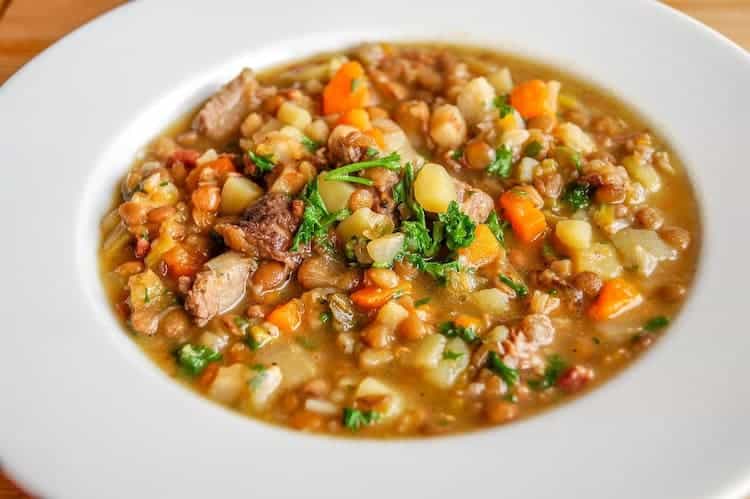
Maharagwe is pretty much a bean stew. In Chad, maharagwe is made with red beads or seeds from the french bean plant, but any beans can be used, from canned kidney beans to haricot.
To make it, you just boil the beans up with onions, garlic, chilling, cinnamon, cardamom, and coconut milk. This forms a delicious beany broth that is incredibly filling. Order a bowl and a flatbread, Kisra, and you will be full from lunch until the night without any worry. If you’re moving around Chad on a budget, this is a great daily meal for less than $1.
Daraba
Daraba is pretty much a vegetable stew that gets its unique flavor from peanuts. The vegetables used in Draba range a lot depending on the season and where in Chad you are. Daraba is not a common Chadian cuisine in the north and you’re likely to find it in the south.
Typically, Daraba contains what you’d kind of expect. Onions, garlic, sweet potato (yams), spinach, chard, and tomatoes. These vegetables are all fried up and then water is added with stock, after which ground peanuts are thrown in for flavor. Then for an added pop, some cayenne pepper is thrown in.

Bangaou
Bangaou is a traditional food in Chad from the north of the country. As you’d expect from the north, it’s not made with beery but is a lamb Chadian stew and has a lot of Arab/Islamic influences.
When cooked properly, the lamb is cubed and then fried to seal in the juices. This is a traditional dish prepared in water along with stock cubes and tomatoes are then added and after a while, sweet potatoes, beans, peas, and/or chickpeas are thrown in to thicken it up. You can’t be sure which vegetables you’re going to get as it depends on the region you’re in.
It’s absolutely delicious when done right. The broth is full of flavor and the lamb is incredibly tender. Plus it’s typically served with couscous or rice and of course, some Kisra.
Capitaine
If you’re in the southern part of Chad, you’re going to find a fish dish or two on the menu and Capitaine is a favorite.
Capitaine refers to Nile perch which is a delicious species of fish found both in Lake Chad and the Chari River. These fish, also known as water elephants or giwun ruwa are some of the biggest freshwater fish on the planet and the locals depend on them greatly.
The flesh is white and thick like a steak. It’s a delicious fish and a voracious predator that eats any smaller fish that swims past. They can be cooked in a lot of different ways including being deep-fried, BBQ with marinades, and the common, sun-dried which is a bit fishy in taste for my palette.
About the Author Roger Timbrook
Roger is a little obsessed with travel. He has been to over 40 countries, broken 3 suitcases and owned over 10 backpacks in 12 months. What he doesn't know about travel, ain't worth knowing!

