
Last Updated: December 10, 2021
Best Wine Regions In Spain
If you were dropped in northern Spain and then magically teleported to the south, you would hardly think you were in the same country. Spain is an amazingly diverse place when it comes to landscapes, terrains, and climates and this has given rise to some exceptional vineyards and some of the best wines in the world.
Wine has been produced in Spain since 1100 BC and since winemaking developed across the country and with countless wine regions to visit, it’s hard to know where to start. No matter where you are in Spain, you’re not going to be far from an excellent wine-producing region but which ones are better than others?
Join me as we take a look at the best wine regions in Spain so you can learn about where all the delicious Spanish wines you drink at home come from and can get some inspiration for a wine road trip around this spectacular country.
Table Of Contents
Show All
Spain’s Wine Influencers

The main things that influence wine regions are climate, geography, and culture and we are going to use these as we divide up each region featured below. Something you should know is that these points are different from how wine regions get an official stamp from Spanish wine authorities and it follows a more French system.
Every wine region in Spain has a little something special that makes either the wine or the region quite unique. Whether it’s soils or architecture, colors or scents, or simply the wine, all of it adds up to make each wine region in Spain what it is.
North Coastal Wine Regions In Spain
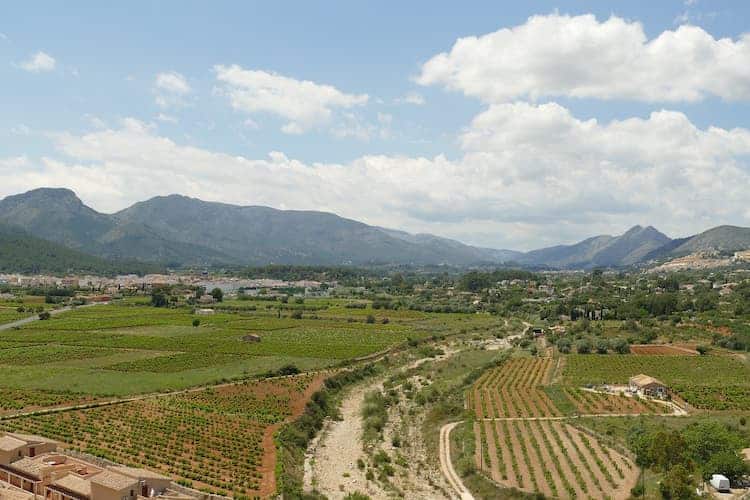
When referring to the wine regions in north Spain we are talking about an area known as Green Spain. It runs from the Atlantic coast of the northwest of Spain and the border with Portugal all the way east to the French border next to San Sebastian.
This entire area is home to numerous wine regions that all share one common aspect, an Atlantic climate. The apart of Spain has a lot more rain than others and it’s home to a strong agricultural culture. The best wine regions in northern Spain to visit are:
Ribeira Sacra Wine Region
The Ribeira Sacra wine region is in Galicia in the province of Lugo and its central hub is the town of Monforte de Lemos. The vineyards in this wine region lie on the banks of the Miño, Sil, and Cabe rivers. You couldn’t ask for more beautiful wine country to visit as the area is full of old churches and villages as well as gorges and a stunning coastline nearby serving up some delicious seafood to pair their famous white wines with.
Winemaking in the Ribeira Sacra goes back as far as the Romans and they make excellent white and red wine but red Mencía and thus red wine is most common. The wines from this Spanish wine region are herbaceous and fruity while being fresh and crisp.
If you’re looking to go on a little wine tour around Ribeira Sacra then the best places to go tasting and to learn about the wines include Bodegas Alvarez Piñeiro, Bodegas Losada Fernandez, and the Riberia Sacra Wine Centre.
Rías Baixas
Rias Baixas is the other major wine region of northern Spain and it’s also in Galicia and a great place to base yourself while you explore it is the lovely coastal town of Pontevedra. Pontevedra sits on the estuary of the Lerez river and is nearby to three others that all shape the wine of the region.
The rivers have created very fertile soils and when combined with the Atlantic climate are perfect for growing the grapes that make the amazing dry white wines of the region, the land of Albariño.
Rias Baixas wines are renowned for their fruity and floral notes of both apricot and peach and they are perfectly designed to go with the delicious seafood that arrives in the ports of the region every day.
While you’re in the Rias Baixas wine region, you could also base yourself in Santiago de Compostela, the medieval town that’s famous for its annual pilgrimage. It’s a wonderful town to stay in and you should spend some time trying the wines at Hostal dos Reis Católicos, an old 15th-century hospital turned 5-star hotel.
Another great wine adventure to do around the region is to home on a boat trip around the fishing villages and coastal vineyards. A lot of them include mussel and wine tasting included and special places like La Toja island.
There are two wineries that you must visit in this region including Bodega Morgadio and Finca La Moreira which is a family-run winery with a stunning country house.
Northern-Central Wine Regions In Spain

This wine region of Spain is inland and is tucked behind both the Pyrenees and Sierra de Cantabria mountain ranges which protect it from the cold Atlantic winds. This climate and geography make it the ideal area for growing red wine grapes and this is where the one Spanish wine region everyone has heard of comes from, Rioja.
This region isn’t just famous for Rioja, it also has some other wonderful red wines including Navarre and Aragon. Aragon isn’t well known but it has been turning some heads in the world of wine with a few Somontano DOs and some Garnacha wines from Cariñena Dos, Campo de Borj, and Calatayud.
Navarre and La Rioja were the heroes of red wine in the 19th century when a plague destroyed the French vineyards. When this happened, the French winemakers came to the La Rioja and Navarre region to partner with Spanish winemakers, and between the local fines, and the perfect climate, Europe had red wine again.
The Ebro River Valley where a lot of Rioja is made gets more of a Mediterranean influence with a more stable climate which makes it perfect for Garnacha and Tempranillo grapes and creates fruitier wines.
If you want to visit the La Rioja, Navarre, and Aragon wine region then a great town to base yourself from is Haro. Haro is very close by to some of the best wineries in the area and there are even some in the town itself.
If you’re looking to do some tasting, there is a long list of bodegas that you should frequent. These include Bodegas Bilbainas, Bodegas Muga, amd Bodegas López de Heredia. If you happen to be in Haro over June 29th then you might witness the famous wine fight of Batalla del Vino where everyone throws wine and grapes.
La Rioja is known for its delicious red wines that are mostly made from the native Tempranillo grape but they make some great whites too. Navarre uses Tempranillo, Cabernet Sauvignon, and Merlot grapes for reds and Chardonnay, Sauvignon Blanc, Garnacha Blanca, and Viura grapes for whites.
Old Castile Central Spain Wine Regions
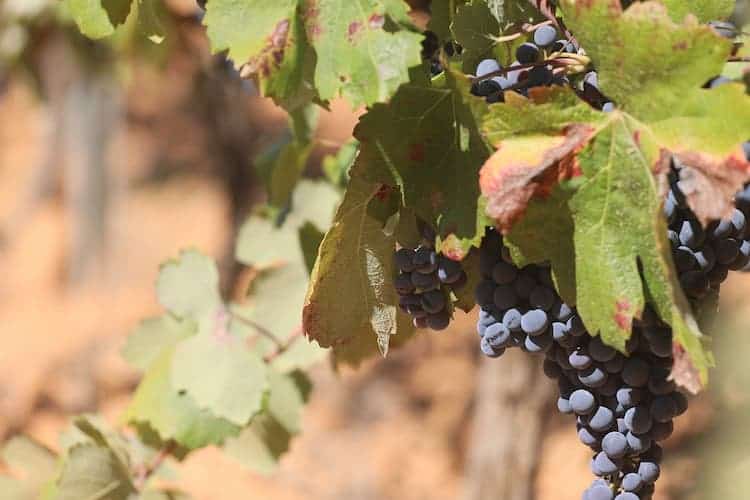
Castilla y León is an autonomous region of central Spain that starts way up north near the Picas De Europa and all the way south to just north of Madrid. It’s home to ancient castles, monasteries, cathedrals, and lovely high altitudes, and a continental climate that is perfect for vines.
Historically Castilla y León wine region made wine for the monasteries and the courts nearby and the famous red wine brand Vega Sicilia was established here as early as 1846. However, the wine from this region remained local for a long time and didn’t start to move around the world until the and of the 1900s when Ribera del Duero rose to fame.
The Castilla y León region is home to Ribera del Duero, Rueda, Cigales, Toro, Bierzo and Ebro wines.
However, the international development of this part of Spain has only happened at the end of the XX century, when became internationally acclaimed. But this wide wine region in central Spain is much more than are full of interesting vineyards and wineries that promise an exciting future in winemaking.
Ribera del Duero
While visiting the Castilla y León wine region in Spain, it’s best to base yourself in the picturesque town of Aranda de Duero, which the Duero river flows through. It’s along the banks of the Aranda de Duero where the vineyards in the area are found as well as on the rocky edges of La Maseta.
The wines of Ribera del Duero were first brought from Bordeaux but since then a native grape has been used to create one of Spain’s best red wine regions.
While staying in Aranda de Duero the top wineries to visit in the area include Bodega y Viñedos Martín Berdugo and Bodegas Historica Don Carlos.
Rueda
Rueda in Castilla y Leon is a white wine producing region in Spain and it makes the most commonly drunk white wine in all of Spain. While it’s not the best wine in the world, it’s made from Verdejo grapes and is fresh with a bit of bitterness thanks to the hints of grass and tropical fruits.
Catalonia and Balearic Wine Regions

Catalonia is in northeast Spain and it runs from the French border to the north and all the way down to the Ebro Delta south of Tarragona. There are 4 provinces in Catalonia including Girona, Tarragona, Barcelona, and Lleida, and with those are eleven Denominación de Origen of wines, which makes Catalonia quite a confusing wine region to understand.
You then have to mix in the beautiful islands of the Balearics that have some great local grapes and interesting wines.
One thing his entire area has in common is their Mediterranean culture and climate. The climate combined with the soils are excellent for white wine and cava but you’ll also find some lovely reds, crianzas, and reserves which mainly come inland from Priora where vines are grown in terraces.
Priorat
The area of Priorat was referred to by Carthusian monks as the Scala Dei or ‘ladder to God’ and you can only imagine how beautiful it is. It was the monks that began winemaking in the region and it wasn’t brought back until the 1980s.
One of the best towns to visit in the Priorat region is Gratallops where you’ll find a host of bars and restaurants that serve up some of the delicious red wines of the area. The region is stunningly beautiful and covered with mountains and quaint old stone villages.
Penedes
The Penedes wine region is the largest wine producing region in Catalonia and it’s exceptionally easy to get to. It sits less than an hour’s train ride away from Barcelona and is a beautiful area covered with mountains and the lovely Meditteranean beaches are close by too.
When visiting the region there is one town to head to, Vilafranca del Penedès, the number one wine town in the region. This wine region is most famous for being Cava country but it also makes some wonderful white, red, sweet, and rosé wines too. The wines are primarily made from Parellada, Macabeu, and Xarel·lo grapes.
If you really love Cava then you should probably go to its birthplace, Caves Codorniu in Sant Sadurní d’Anoia.
If you happen to be in Penedés during September, you might be lucky enough to see the Fiesta de la Filoxera where locals dress up as the Phylloxera parasite which destroys vines and then they dance through the streets.
The Meseta, Madrid and Castilla La Mancha Wine Regions
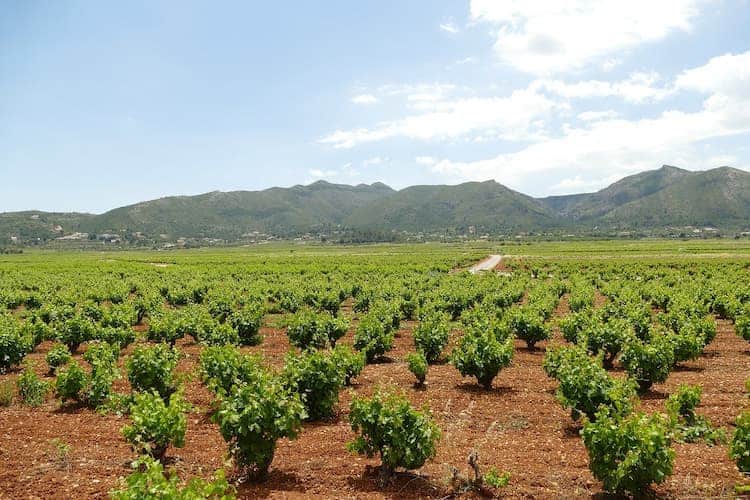
This part of central Spain is very much isolated from the coast and this semi-arid region is said to experience only two types of weather, summer, and winter. This part of Spain is mostly covered by the arid plains called La Meseta.
This wine region of Spain is hugely vast and runs all the way to the Portuguese border. The land here is extremely affordable it includes the areas of Extremadura, Madrid, and the biggest vineyard in the world, La Mancha.
It’s not just home to huge vineyards, you can also find some smaller wineries that are pushing out some new, exciting, and delicious wines.
La Mancha is a white wine that is made from the local Airén and Macabeo grapes of the region and Chardonnay and Sauvignon Blanc from France to create a delicious taste that goes well with the local manchego. Méntrida is a top draw wine from the region and it makes mostly Albillo, Bordeaux blends, and Garnacha.
Levante Wine Region of the Southern Mediterranean Coast
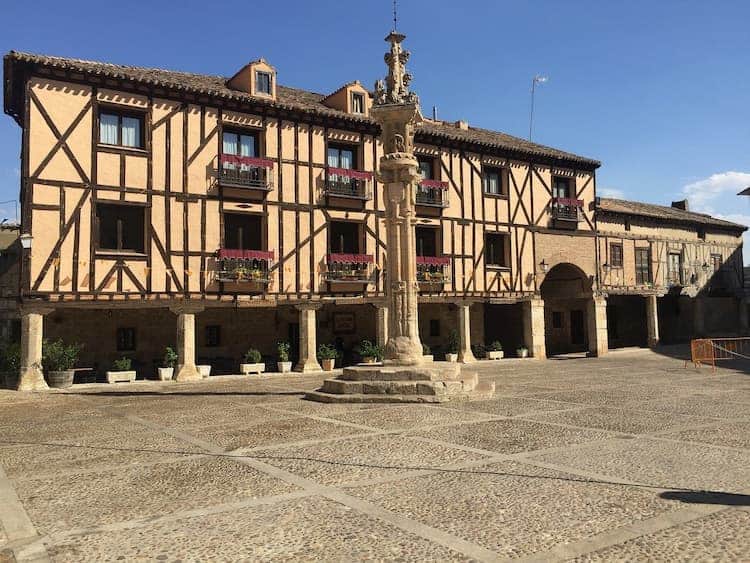
This wine region starts just south of Tarragona in Catalonia and runs 500 km south past Valencia all the way to Murcia. The warmer temperatures of this region along with the Mediterranean climate have shaped some delicious wines. This region has always been gracious in exporting most of its wine and at a very affordable price too.
This region grows mostly Bobal and Monastrell grapes which are a local variety that handles the hot climate very well and have produced some delicious wines.
Some of the best wines from this region include Bodegas Luzón 2019, Colección Roble Monastrell and Crápula 2018 CR Soul Monastrell.
Andalusia Wine Regions
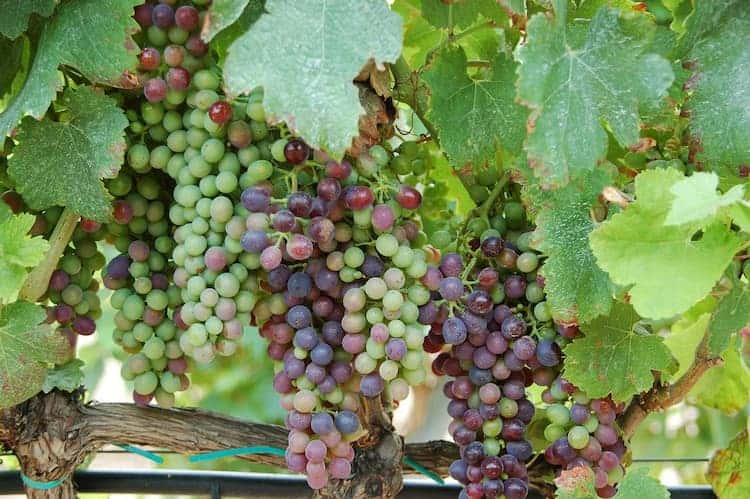
Andalusia is the most iconic region of Spain and it pretty much covers the entire south coast of the country. There are 8 provinces in Andalusia and the city of Cadiz is thought to be where wine production started.
Andalusia is home to almost everything one thinks of when Spain comes to mind such as olive fields, flamenco dancing, white villages, bullfights, and of course, wine. Andalusia is most notable for its sherry wines but it has a lot more to offer than these.
If you want to travel around the Sherry Triangle tasting sherry from the barrel then you should go to the town of Jerez de la Frontera, just south of Seville. Along with El Puerto de Santa María and Sanlúcar de Barrameda, Jerez de la Frontera forms the Sherry Triangle and the town is packed with little sherry bodegas.
You might not like sherry wines very much as they have a reputation of being too sweet and sickly but this is a misconception in the sherry triangle. Taste as many different sherry wines as you can as they will surprise you.
For a look at the vineyards, head to the Moorish fortress Alcázar where you can see the Jerez vineyards going on and on into the distance.
Malaga
Malaga is on the south coast of Andalusia and is has been making wine since the Phoenicians live there which predates the Romans. In fact, British wine merchants used to sail to Malaga to ship back wine to the Victorians in the 19th century, so they know how to make wine.
The wine in Malaga is mainly made from Pedro Ximenez and Moscatel grapes and they are fortified and quite naturally sweet. You can find both red wine and white wine from Malaga and both pair wonderful with goat’s cheese that is found locally.
If you want to visit a winery in Malaga, the one to go to is Bodega F. Schatz which was founded by a German. They produce some of the best wines in Malaga plus you can tour around the vineyards and do a tasting too.
About the Author Roger Timbrook
Roger is a little obsessed with travel. He has been to over 40 countries, broken 3 suitcases and owned over 10 backpacks in 12 months. What he doesn't know about travel, ain't worth knowing!

