
Senakulo
Senakulo is a nationwide event that helps devout locals relieve biblical events pertinent to the life, tribulations and ultimate sacrifice of Jesus Christ.
It was named after the Upper Room (Cenacle), which is thought to be the place where the Last Supper was held. Senakulo is very important for the culture of the Filipino people, but it’s not an event exclusive to their tradition. In fact, Senakulo is simply the Filipino version of this Catholic tradition, which is known as Passion Play around the world.
Passion Play Around The World
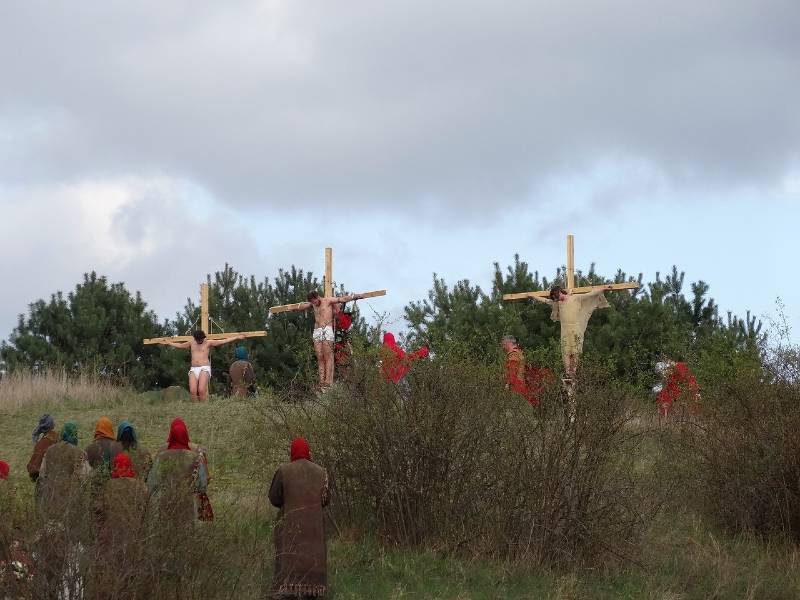
If the event concept sounds familiar, that’s because you might have already witnessed it in your travels. Passion Play, also known as Eastern pageant, is a Catholic tradition that is present not only in the Philippines but in many other countries where Catholicism is the dominant religion – Canada, Australia, the Netherlands, Spain, the UK, and many other countries around the world.
Of course, the event is adapted to suit the culture and tradition of that particular nation, but its core is the same – it is essentially a dramatic reenactment of the last period of Christ’s life, namely his trial, suffering, and death.
The reenactment of the crucifixion is perhaps the most important part of Passion Play since it remains one of the most important events in the history of Catholicism.
Senakulo

Image courtesy of Bar Fabella
This presentation is performed on a unique stage, quite unlike modern theatre halls. Typically, the stage consists of telon(painted paper used as backdrops, cloths are also used). The event lasts a total of eight nights, beginning on Palm Sunday and culminating on Easter Sunday – this is known as Semana Santa (Holy Week).
Presently, however, due to numerous constraints, the event does not always last eight nights, and may just be summarized to take up a couple of hours. More importantly, the shortened versions of Senakulo often make use of just about any stage, whether it is in the church, or in the streets, even in public spaces.
But, this is still a theatrical performance, with a lot of preparation behind it. The scripts draw from both the Bible and the folk tradition, while the costumes and scenery are closer to Hispanic iconography, instead of historical realism. This is especially true of the more recent productions, which are done by professio